



Author Archives: Roofing SEO Webmasters

  • expertise.com best seo agencies in fort worth
  • contractors of america best digital agency
  • roofers coffee partner
  • national roofing contractors association nrca partner
  • roofers guild accredited agency
  • roofers paradise best of award

Link Building Guide for Roofing Companies


Link building for roofers is a strategic process of earning backlinks and mentions from reputable websites to establish your company’s local and industry authority.

With the emergence of AI, including within Google’s standard search results, brand mentions, and backlinks signal that your roofing business is credible, active, and trusted by the community.

The old-school quantity-first approach to link building is obsolete. Modern algorithms prioritize relevance and intent, making one link from a local home builders association or regional news outlet carry far more weight than dozens of links from spammy directories.


Though Google and other search engines have grown more sophisticated in grading links, many roofing companies have been slow to adapt, and continue to engage in practices that won’t move the needle for rankings or reputation.

The following guide outlines modern link building for roofers, including the best practices and how to approach earning links from reputable domains.

Roofing Company Link Building

The Impact of Link Building on Roofers

While Google’s ability to evaluate links and context has certainly evolved, credible sources confirm that backlinks are still a significant ranking factor.

For local roofing websites with comparable content and website quality, the site with 15 high-quality backlinks will almost certainly outrank a nearby competitor with only one backlink.

As a result, roofing companies must still strategize on how to build links to their websites. The difference today is that the strategy must be more disciplined, targeted, and nuanced than in the early days of SEO.


Roofing Link Metrics

Higher Google Search Rankings

The direct impact of link building for roofing companies is most evident in organic search results. We tested this by analyzing the keyword “roofing company denver” inside SEMRush.

As you can see, the ranking positions for this keyword directly correlate to the number of backlinks pointing to each page.
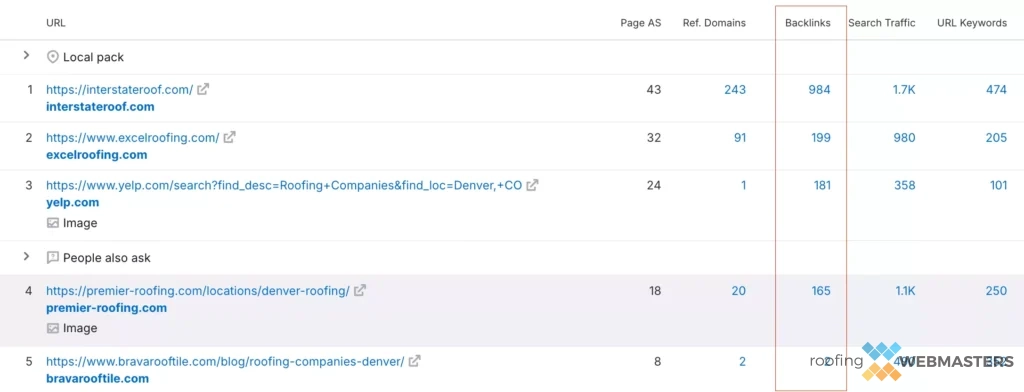

SEMRush Backlinks by Ranking Position for "Roofing Company Denver"

Higher Google Maps Rankings

The correlation between links and Google Maps rankings is less pronounced, but still present. The Google Maps algorithm first considers the distance between the business address and the searcher’s location, then other factors such as prominence and relevance. 

Links to your website improve the prominence of your Google Business Profile, provided you include your URL in the website field.

One mistake roofing companies make is building links directly to their Google Business Profile, which will not contribute to rankings. Instead, you want the links pointing to your official website.
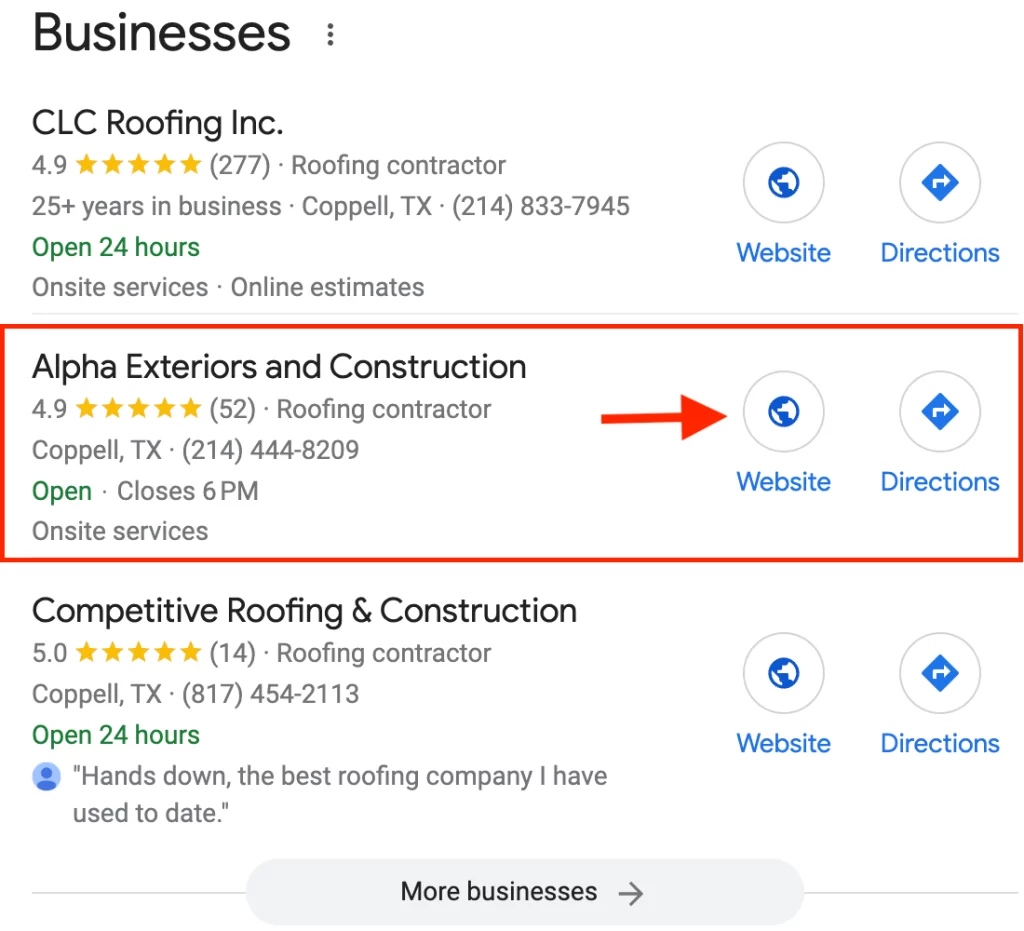

Map Pack Website Field

Referral Traffic

A lesser-known impact of link building is referral traffic. When high-traffic websites link to your pages, people will click through and end up on your website.

This generates a new source of website visitors and signals to Google and other search engines that the link is highly relevant.
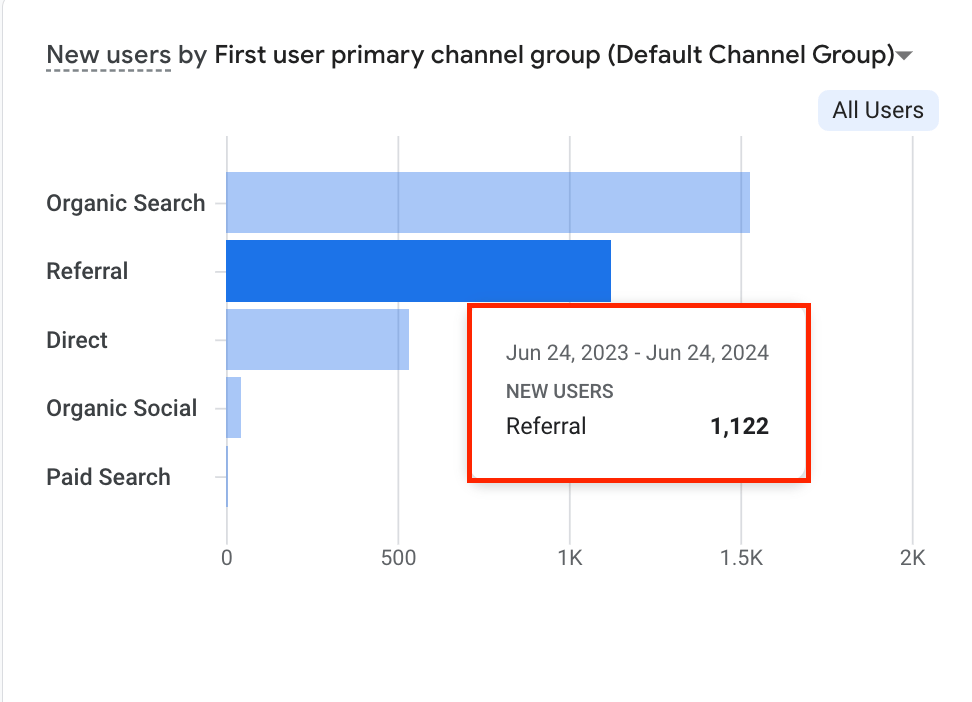

Analytics Referral Traffic

Measuring Impact With Google Analytics

Use Google Analytics 4 to measure the traffic to pages with the most backlinks. You can compare and contrast the correlation between referring domains and page traffic.

If a page with numerous backlinks fails to generate traffic, the links may be low-quality, or the page may have on-page or content issues that prevent them from making a difference.


Types of Roofing Links

Not all links hold the same algorithmic weight for roofing companies, and the ones that are easiest to secure are often the least impactful on performance.

For example, anyone can create and claim business listings on directories like Yelp and the Better Business Bureau, so they cannot be weighted as heavily as an editorial link on a major news website.

With this in mind, it’s useful for local roofers to understand the types of links and which ones to prioritize in their link building strategy.


To better understand this concept, let’s take a look at the types of roofing links:


NoFollow Roofing Links

NoFollow links are manually built on websites that give you total control of the link process. Not all NoFollow links are equal, and Google now uses attributes as hints for crawling and indexing them.

For example, rel=”ugc” is the proper link attribute for NoFollow links on forum discussions, whereas rel=” sponsored” is appropriate for paid sponsorship links.

Even NoFollow links that don’t directly impact your website’s authority are useful for entity validation purposes, helping Google confirm your company’s legitimacy, activity, and relationship to your service area.

For example, despite the lesser SEO value, local citation links remain a valuable resource for roofers.
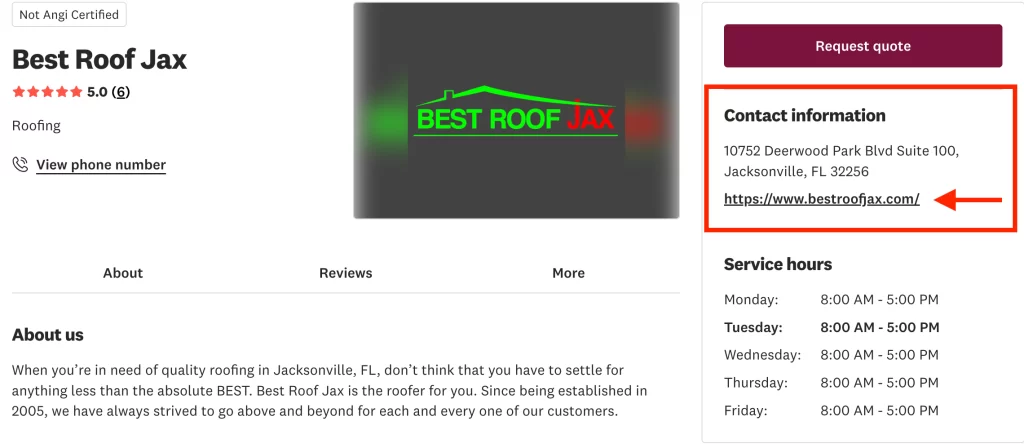

Roofing NoFollow Link

DoFollow Roofing Links

DoFollow Roofing links hold 100% link equity for search engines. They are links approved by third-party editors who hold editorial control of the link’s placement.

Examples of these links include roofing blogs, local newspapers, and local contractor or business websites (typically in an adjacent industry).

Google generally weights DoFollow backlinks as a vote of confidence from the linking website to the linked page.
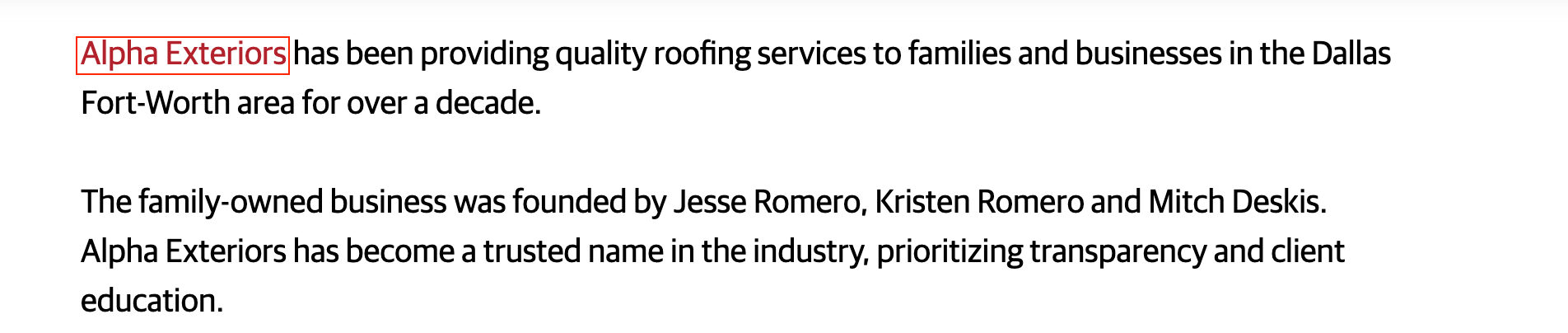

Roofing DoFollow Link

How To Build Roofing Links

Modern link building is a nuanced balance of digital PR, local networking, and intentional content strategy. Google’s AI-driven algorithms, such as SpamBrain and Vertex AI, are far too sophisticated to assign authority based only on the total number of links.

Instead, these algorithms evaluate the context and intent behind every backlink and brand mention for your roofing company. As a result, building links has evolved into earning authority, and success now requires a proactive strategy that prioritizes relevance over quantity.


Create Data-Driven Linkable Assets

The most organic way to get backlinks is to create content that other websites find valuable to their visitors and are willing to link to naturally.

Although how-to guides were once considered the gold standard of linkable assets, AI Overviews have rendered them obsolete. Content that earns links in the modern search landscape must focus on original data or proprietary tools.

For example, a “Roofing Cost Calculator” or “Hail Damage Case Study” provides unique value that journalists and bloggers will consider citing in their articles and posts.


Email Outreach

Email remains an effective method for building relationships with influential adjacent websites such as local realtors, solar installers, and home inspection companies.

The key is to focus on value-first proposals, such as identifying links to 404 errors on these websites and proposing an alternative link to your content asset as a replacement.

Your focus should be on editorial placements, which are links that exist within the body portion of the content, rather than a footer or sidebar.


Submit NAP Citations

Google’s local algorithm uses brand mentions, such as reputable citations listing your company’s name, address, and phone number, to cross-reference your business data across the web.

A consistent profile on a major directory like Yelp or Better Business Bureau (BBB) signals to Google that your roofing company is a legitimate entity in your defined service area.

For citations, focus on quality over quantity, as many of the lesser-known directories are not even indexed on Google, rendering a citation from them useless in regard to SEO.


NAP Citations

Guest Posting

Contributing a guest post to a reputable home improvement or local news platform is an effective way to earn links for your roofing company website.

The key is securing a guest post on a relevant, reputable domain, as most websites that explicitly promote guest posting are link farms that accept posts from anyone in exchange for payment.

The first step is identifying a list of target websites, such as local news outlets, community or industry blogs, and trade publications.

From there, you should email them a pitch focused on value for their readers and outlining your topic and what differentiates it from other posts on their website.


Local Community Engagement

Engaging with your local community can organically result in valuable backlinks to your roofing site. Whether you sponsor an event or a Little League team, a credible website can link back to your roofing homepage.

Attending local events and networking with other businesses and entities within your service area will increase the number of these opportunities.

Most people are far more receptive to linking to your website when they’ve already met you in person, and can assign real-world credibility to your business.


Link Gap Competitor Analysis

Using tools like SEMRush and Ahrefs, you can compare your site’s link profile to that of competitors. With Link Gap Analysis, you can determine which domains link to your competitors but not to you.

If you notice two or more of your competitors have a backlink from the same website, you may be able to pursue a link from the same domain.

Securing these links can help close any algorithmic gap between you and your competitors, making your content and technical SEO a more impactful differentiator.


Backlink Monitoring for Roofing Websites

Various 3rd-party tools can track your link profile, including Google Search Console, Ahrefs, and Majestic. However, don’t be alarmed if you notice some spam links pointing toward your domain.

Google’s SpamBrain AI has evolved to detect and ignore irrelevant and low-quality links. So while Google still provides a backlink disavow tool, they generally discourage using it.

Instead of spending hours auditing every backlink on your website, focus on your site’s broader link profile and whether you’ve earned enough local and industry links to justify your brand.


Anchor Text

The primary indicator of link spam is the overuse of keyword-rich anchor text. For example, if you own a roofing company in Seattle, WA, and your backlink profile shows 200 links with the anchor text “roof repair Seattle,” Google’s algorithm will suspect they are illegitimate.

Anchor text patterns like this used to result in manual actions in which Google manually removed your website from search results. Today, these instances are mainly handled by Google’s SpamBrain AI and broader algorithm to either ignore the links entirely or suppress the targeted pages in rankings.


Topic or Location Irrelevance

Another indicator of link spam is when irrelevant domains or pages are pointing back to your roofing website. For example, a casino website linking to your roofing company can raise a red flag.

While you don’t want to pursue random links from unrelated blogs, local businesses have more leeway when it comes to topics, because location alone can provide enough relevance for links to be useful.

One example is when a local Little League website links back to your roofing company. While Google knows baseball and roofing are unrelated, they also know that community organizations get sponsorships from local businesses all the time, and consider that a vote of confidence for your brand.


The Pillars of a High-Impact Roofing Link

Google’s AI looks for relevance, reputation, and regionality when evaluating a backlink. With this in mind, it’s critical to vet potential link opportunities by assessing whether it checks these essential boxes.


Below are the pillars of a high-impact roofing link:
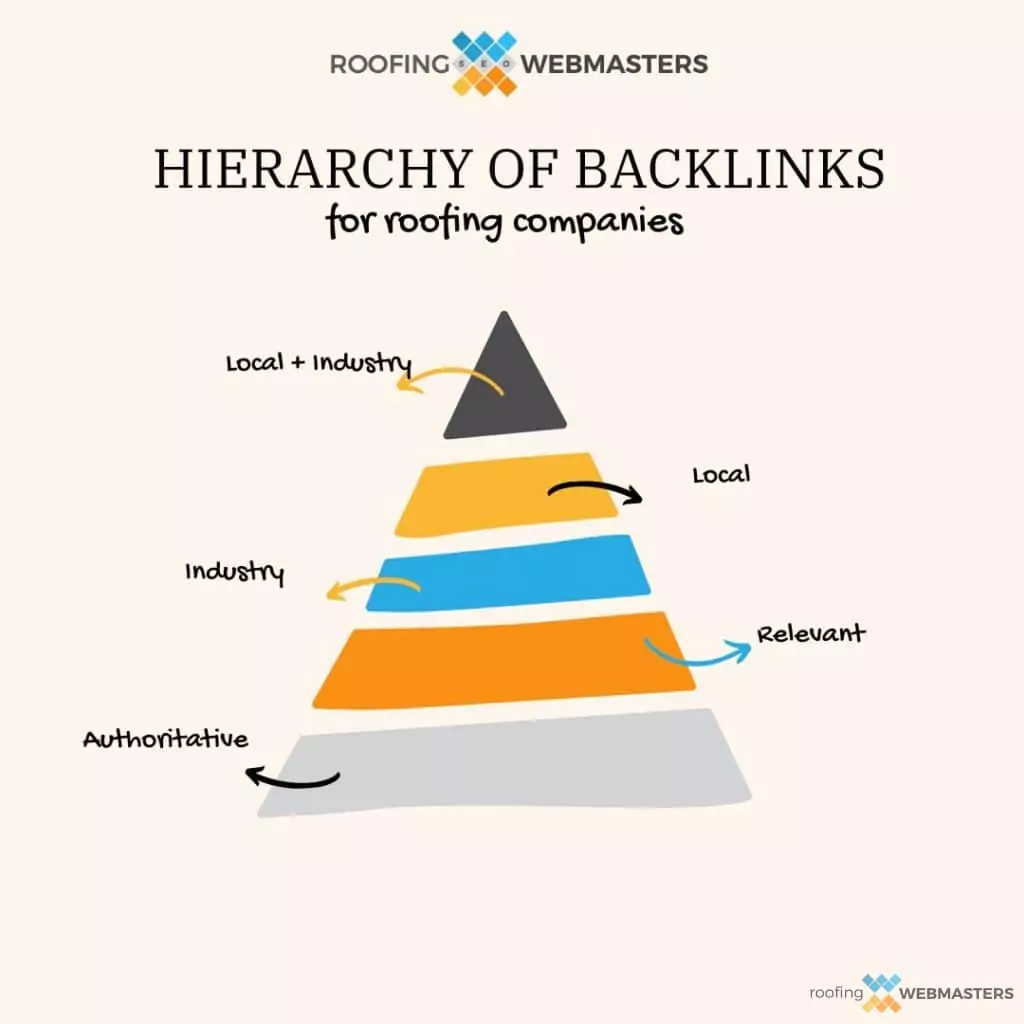

Roofing Backlink Pyramid

Indexing

The baseline standard for a worthwhile backlink is indexing. In other words, links from pages that Google chooses not to index don’t hold any SEO value.

If Google finds a page so low in value that it is not worth indexing, it holds true for any potential link equity to other sites.


Relevance

Links from local entities are most relevant to roofing companies, with industry or industry-adjacent links ranking second.

A backlink from a local home builders association or neighborhood news outlet helps validate your business within the community it serves and is a significant factor in local rankings.

Additionally, links from industry blogs or national roofing material suppliers are also valuable digital endorsements that can boost overall visibility.


Traffic

Google assigns greater weight to links from websites with genuine human visitors. Zero-traffic websites are often categorized as link farms, which eliminates any equity they attempt to pass.

Aside from the SEO benefit of high-traffic links, they also pass referral traffic from authentic visitors, which can further contribute to your visibility and recognition.


Placement

Editorial links within the body content of a page or post carry the most SEO value because they signal that your link genuinely helps readers. Because of their high value, they are typically rarer than other link placements.

Conversely, links shoved into footers or sidebars have less SEO value and are unlikely to result in noticeable changes in your ranking visibility.


Domain Authority

Domain Authority (DA) is a MOZ metric and also a general term used by SEO professionals to describe link authority. Google does not use this metric in its algorithm, but likely has an internal score that follows a similar model.

High-ranking local roofing websites typically have a Domain Authority between 20 and 30, depending on their service area and competition. While authority remains a factor, it’s less important than local or industry context when building links to a roofing website.


Building Long-Term Link Value for Roofers

Modern link building is about verifying your business’s legitimacy and solidifying your reputation in the real world. Google’s AI-driven algorithms are sophisticated and far too advanced to be manipulated by old-school link tactics.

This evolution often requires a mindset shift for roofers and their digital marketers from acquiring links to earning authority. Producing high-value local content and fostering strategic community partnerships empowers you to build a resilient brand that Google trusts to provide solutions to its users.

The roofing companies succeeding today are treating their digital presence with the same craftsmanship they apply to a roof. Focusing on genuine value in your community and building a network of reputable digital endorsements paves the way for rankings, traffic, AI citations, and ultimately, leads.


For assistance with your roofing link building campaign, contact Roofing Webmasters for a free consultation.


Nolen Walker

Author: Nolen Walker

Nolen Walker is the founder of Roofing Webmasters and the creator of DataPins™, a Local SEO platform for roofing companies. He has over 16 years of experience helping roofing businesses grow through organic search, Google Maps, and AI-driven visibility.

Nolen is the author of A Complete SEO Guide for the Roofing Small Business Owner . He also hosts The Roofing SEO Podcast on Spotify.

Posted: | Updated: Apr 2, 2026 | Categories: Link Building
  • expertise.com best seo agencies in fort worth
  • contractors of america best digital agency
  • roofers coffee partner
  • national roofing contractors association nrca partner
  • roofers guild accredited agency
  • roofers paradise best of award

Commercial Roofing Marketing: The Essential Guide for 2026


Commercial roofing marketing is one of the most profitable investments a company can make, yet it is rarely discussed in articles, YouTube videos, and other forums in the roofing and marketing industries.

Instead, most roofing marketing strategies focus on hybrid companies or those specializing in residential roofing jobs.


The commercial roofing industry is highly competitive, requiring a unique, targeted marketing strategy to achieve optimal results in 2026.


Because commercial jobs often yield big-ticket revenue that can set your company up for a successful year, competition for commercial roofing leads is fierce.


Depending on your location, multiple companies may vie for these big-ticket jobs. So, how do you become the proverbial “big fish” in a vast ocean?

I will explain it in detail throughout this marketing guide for commercial roofers.


Commercial Roofing Marketing (Blog Cover)

Getting Started With Commercial Roofing Marketing

What separates successful commercial roofing businesses from unsuccessful ones is typically marketing.

Marketing, particularly SEO for roofers, is what will help your business stand out amid hundreds of competitors.

Without a proper digital marketing strategy, you will be fighting an uphill battle in this increasingly internet-oriented world.


A study by Soci found that 80% of consumers use a search engine to find local businesses weekly.


People are asking to find your business. But is yours visible? The fact is that you need a specific online presence if you want your business to survive. Digital marketing is therefore crucial to your business’s success.


Tips to Market Your Commercial Roofing Company

Below, I review some of the most effective digital marketing strategies for commercial roofers. Implement these strategies to generate more leads, convert customers, and dominate your local market.


Increase Visibility

I’ll start with an elementary yet chiefly important aspect of any digital marketing strategy. You can’t hope to gain more customers if they can’t see you online.

Increasing your visibility can be as simple as setting up a profile on sites like Angi, Yelp, Apple Business Connect, and LinkedIn Company Pages.


You will also want to invest more time creating a business listing on Google Business Profile, which 64% of online consumers report using to help them find local businesses.


It’s straightforward: the more places you have profiles on, the more chances people will have to notice your company.

Google Business Profile should be your first effort to increase your online visibility.

But remember that even people who think they have an excellent online presence can probably still improve it.


Many commercial roofers fail to consider smaller but still relevant sites like HomeAdvisor, Nextdoor, and the Better Business Bureau, which boasted millions of local business searches last year.


Showcase Reviews & Reputation

Ask yourself this question: How many people do you know who never read online reviews? The list you come up with will probably be pretty small.

In an age where a whopping 91% of consumers report reading online reviews on at least an occasional business, you can’t afford to have reviews posted on your website and various business profiles.


People must leave reviews for potential customers to gain the information and confidence they need to hire you as their commercial roofer.

So you have to make it easy for them. Again, starting with your Google Business Profile would be best.

Create a short link to the page where your customers can leave reviews, and share it across all your major platforms.


You can also consider including a QR code on business cards and invoices that links directly to your review page.


Of course, you will want mostly positive reviews, but some consumers are skeptical of perfect 5-star ratings.

Studies have shown that people are suspicious of companies with perfect ratings, especially if they have over 100 total reviews.

A consistent rating of around 4.2 and 4.8 stars appeals to consumers’ expectations for a roofing company.


Post the “review us” link on your website and various business profiles, and include it in emails.


Reputation management software like DataPins can streamline the process. Don’t be afraid to ask your customers for reviews directly, either. Most people will write a review for you if you ask them. 


Interact With Customers

This next commercial roofing marketing strategy sort of picks up where our last point left off. It’s not enough to get reviews; you must also reply to reviews.

Google has recently updated its Business Profile support page to include a section explaining the importance of reading and responding to reviews. 

It is especially important to respond to negative reviews.


Responding to negative reviews shows consumers that you care about their satisfaction and are willing to correct mistakes.


If you only have time to react to specific reviews, focus on negative ones. 

Ask your followers questions, spark discussions, create questionnaires—anything that allows you to interact with them and shows that you care about their opinions.

Studies have shown that people are more willing to spend more money on companies they perceive a prioritizing customer experience. 


Interacting with your customers shouldn’t stop at reviews. There are plenty of ways to reach out to current and potential customers through Facebook, Instagram, and Twitter.

Make sure you create new posts regularly.


Content Marketing and Production

Content marketing is an extremely efficient strategy, especially since the emergence of AI search platforms like ChatGPT and Google’s AI Overviews.

It generates three times as many leads as traditional outbound marketing strategies, at a cost of less than half on average.

Content marketing can also be especially helpful for commercial roofing businesses, as this space offers many untapped content opportunities.


Create unique content related to your services and service areas to maximize topical authority and attract qualified website visitors through AI search platforms.


How-to videos uploaded to your YouTube channel are also effective forms of content marketing and can be included within Google AI Overviews.

Remember that content marketing aims to draw people to your website or business profile page. Secondly, you should emphasize providing some value to your customers.


Content marketing can be DIY, or hire a professional marketing team to help you flesh out your strategy. Either way, it is a crucial investment that can yield healthy returns. 


Keyword Research

Keyword research is a must for any digital marketing strategy. You must know which keywords people use to search for your services and strategically implement them.


Tools like SEMRush and Ahrefs can measure search volume for specific commercial roofing terms.


However, working with a team that can provide in-depth competitor analysis on keywords is also a good idea. 

And knowing the keywords is only half the battle. Using them strategically in your content and in any ads you run is equally, if not more, important.

Another general rule of thumb is that search engines value long-tail keywords containing the name of the city you service.


Your primary keywords should include the town’s name and the state where you operate. Geo-targeting will help with local SEO and make it easier for your target market to find you. 


Social Media Marketing

Social media marketing is a powerful tool for roofing companies. It covers all the most critical aspects of marketing: reputation management, customer interaction, advertising, and visibility.


You should be posting regularly on your Facebook and Instagram profiles. But posting just any type of content won’t do the trick. Your social media marketing has to be focused and purposeful.


Take a look at some tips for effective social media posting:


  • Have a Purpose – Each post you compose should have a goal. Maybe you are rolling out a new commercial roofing service and want to let your customers and potential leads know about it. Or perhaps you are offering your services in a new city. Whatever the situation, be sure to stay on target with all your social media posts.
  • Utilize Reels – Instagram Reels provide a lot of businesses with an exciting and effective way to engage with their target market. However, as a roofer, it can be challenging to figure out how to utilize this platform in a relevant manner. Consider recording a video at the beginning and end of a project. Think of it as a before-and-after feed that keeps your community engaged and eager to see how the project turns out. After all, people love good before-and-after content.
  • Avoid Excessive Promotion – Facebook and other social media platforms have cracked down on certain posts. As much as you want to promote your business, be sure your posts provide value to the reader first and foremost.
  • Deliver Brand Consistency – Ensure that your social profiles consistently display accurate contact information and a commercial roofing logo so customers feel comfortable interacting with your company.

Work with Commercial Roofing Marketing Professionals

Here at Roofing Webmasters, my agency focuses on businesses in the roofing industry.

My team’s specialized experience and a broad array of marketing services make us the right choice for your company, whether just starting out or already well-established.

I know how to help commercial roofing companies succeed through effective marketing strategies, including those mentioned in this post and others.

I even help residential roofers expand into commercial roofing to multiply their customer acquisition. Reach the next level of success with my digital marketing services. 


  • expertise.com best seo agencies in fort worth
  • contractors of america best digital agency
  • roofers coffee partner
  • national roofing contractors association nrca partner
  • roofers guild accredited agency
  • roofers paradise best of award

Video Marketing for Roofers (2026 Guide)


Have your roofing leads gradually decreased over the past few years? If so, the primary culprit could be a lack of video marketing.

Adding a video to a landing page on your roofing company website can increase conversion rates up to 86%

That statistic aligns with a seismic shift in consumer behavior, in which most homeowners consume content on video-first platforms such as YouTube, Instagram, Facebook, and TikTok.

Meanwhile, search platforms like Google, ChatGPT, and Perplexity directly cite videos when generating responses.


Considering all these factors, video marketing for roofers is essential to your broader digital marketing and lead-generation campaigns in 2026, something you can learn more about in our search engine optimization guide.


Key Takeaway

Video marketing for roofing companies can increase conversion rates by 86% while ensuring multi-channel visibility across platforms such as Google, YouTube, TikTok, and ChatGPT.


Roofing Company Video Marketing (Blog Cover)

Nolen’s Roofing Video Marketing System

I’m Nolen Walker, and I founded Roofing Webmasters more than a decade ago. Since my agency’s inception, video marketing has become increasingly essential to online lead generation.

I developed a video marketing system based on first-hand experience and expertise from working with more than 1,000 US-based roofing companies over the past 15 years.


Team Showcase Videos

The first thing homeowners look for in a company is humanity. If your roofing brand lacks names and faces, nobody will trust its services.

Your first videos should showcase your culture and staff and feature a company introduction from the founder.


On-site Job Videos

Your following videos should showcase your team in action, on the site of actual roofing jobs. Google (whose parent company owns YouTube) looks for E-E-A-T —experience, expertise, authority, and trust.

My agency developed a software tool called DataPins that lets you upload job videos to both YouTube and your website simultaneously.


Customer Testimonial Videos

Consumers trust people like them more than anyone else, which is why customer testimonial videos are so effective for video marketing.

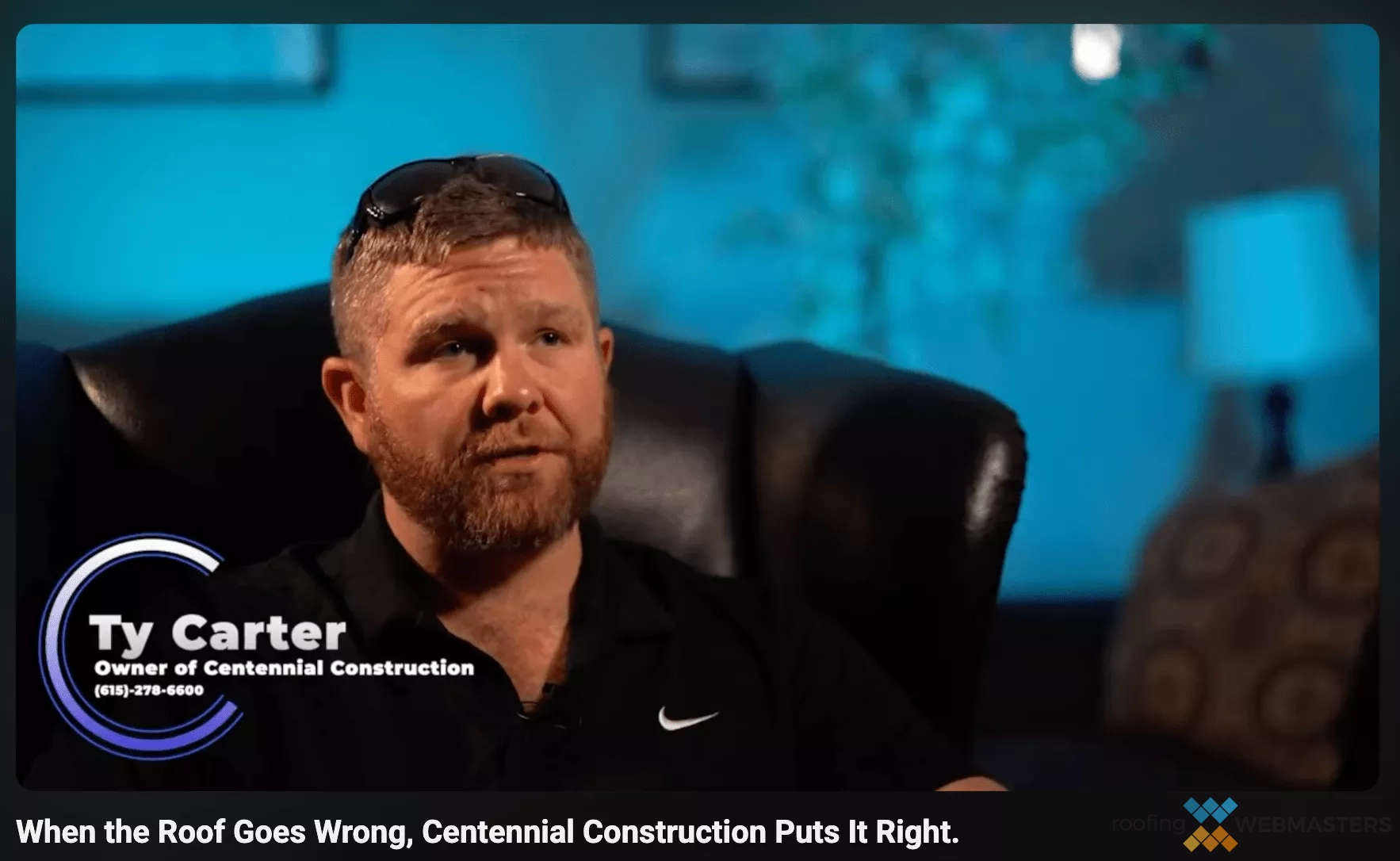
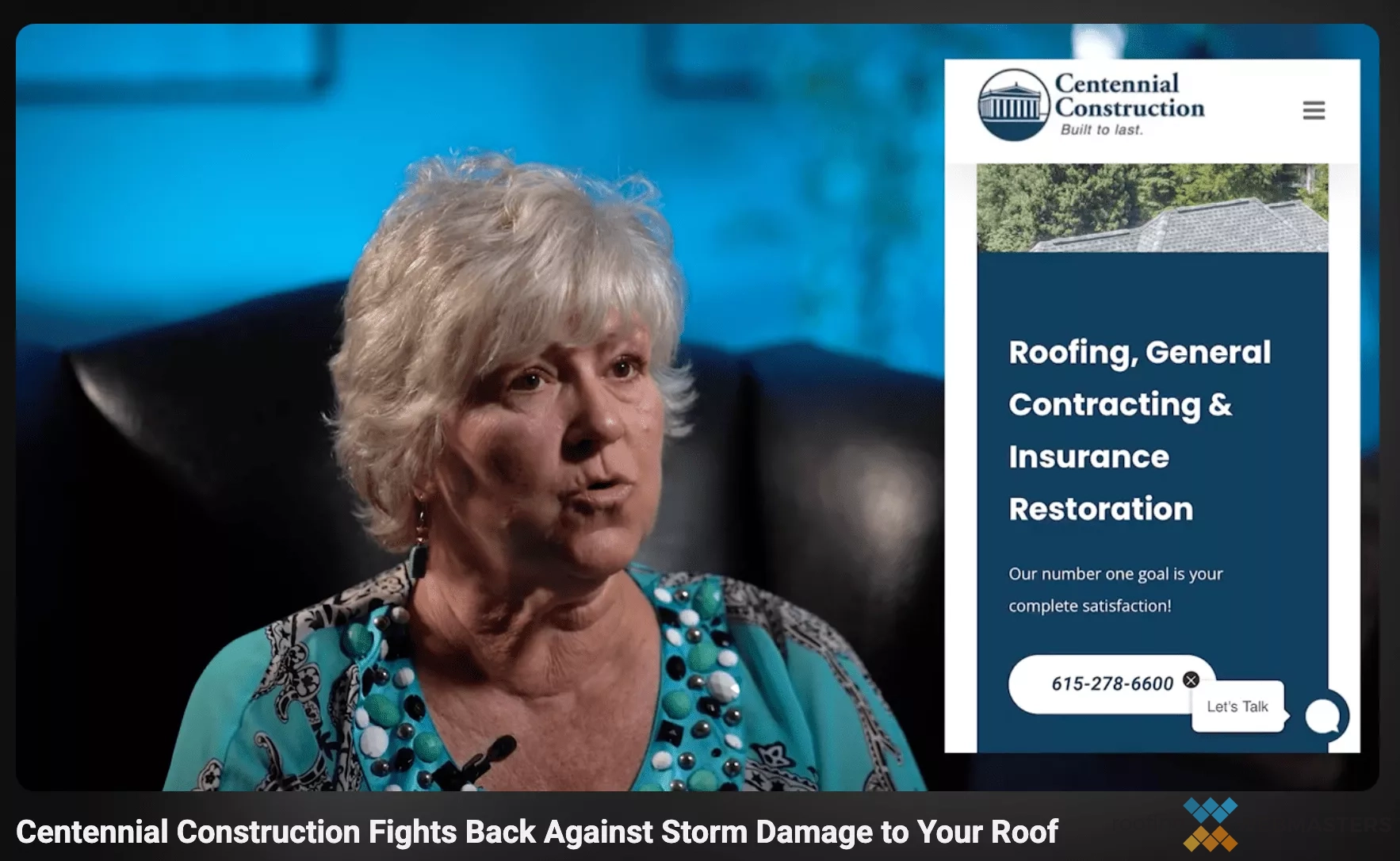
Ask some of your regular customers if they are willing to record a video testimonial, which you can then upload to YouTube and embed on your website to increase conversions.


Community Involvement Videos

The last video type in my system is optional, but it helps separate your brand from competitors.

Community involvement videos feature you and your staff participating in community events such as ribbon-cutting ceremonies, Little League games, or charity events.

These types of videos increase trust with your target consumers and solidify your brand’s association with your primary service area.


Publishing Roofing Company Videos Online

Recording a video with your smartphone or camera is easier than ever. Most contractors have video cameras on their phones, enabling them to record their team on the job and in the office.

Most smartphone cameras can capture videos in an impressive quality that is more than enough to appeal to consumers.

The fundamental distinction in quality usually occurs at the audio level. So if you want to make an investment, purchase a basic lapel microphone that clips to your shirt, which should cost $50 or less.


Roofer Video Content Graphic

The recording process is about action, not overthinking. Once you record your first set of videos (which you can reference from Nolen’s video marketing system above), you should upload to these platforms:


YouTube

YouTube is the largest video platform in the world. It is also owned by Google and, therefore, tied directly into their search results.

When someone types in a phrase like how to repair a commercial roof, you’ll notice videos displayed on page one of organic search results.

While informational queries are more likely to trigger a video result, our clients have seen commercial queries, such as emergency roof tarp installation frisco tx also produce videos within the SERP.


Facebook

Another great platform for video is Facebook. Like YouTube, Facebook has a native video upload feature so you can upload the file directly to Facebook’s servers and publish it on your business page.

If you already have the video uploaded on YouTube, sharing it on Facebook could help it get more views. You can also select a different video as a Facebook exclusive.


Instagram

You can cut your video into 60-second clips and upload them to Instagram. Three minutes is the maximum length for Instagram Reels, but shorter videos almost always perform better than longer ones.

While you shouldn’t expect a roofing services video to go viral, it can still boost your social media signals and can have a positive overall influence on your site.


TikTok

TikTok is the fifth-most-popular social media network globally in terms of monthly active users, and one that most roofing companies can benefit from participating in.

While their user base leans younger than Facebook, there are more than enough homeowners on the platform to make publishing video content worth your while.


Vimeo (Optional)

Vimeo offers unique SEO value for roofing companies with promotional video content. Unlike YouTube, embedded Vimeo videos automatically markup your iframe with indexifembedded rule as instructed by Google.

Google can correctly index videos on your roofing company website while identifying chapters and key moments.


Website (Self-Hosted)

Roofing companies can publish self-hosted videos directly on their website.

WordPress makes this easy with its media upload feature, allowing web admins to embed video files wherever appropriate throughout the site.

However, be careful not to overload your website with video files, as this can slow loading times and negatively affect the user experience. 


The Video Marketing Process for Roofers

It helps companies know precisely how video marketing occurs from start to finish. While some roofers naturally understand modern technology, others need help with the step-by-step process.

Roofing Webmasters can help you outline the entire video marketing sequence.


Production

We have a production set inside our offices for roofers with no videos. We invite you to cut a video, maybe even a podcast, and allow us to distribute them through all the appropriate channels.

Distribution helps build more media signals for your roofing company and increases your Google brand’s visibility, which should help boost search rankings.


Editing

If you have existing videos, including drone shots, we will chop them up and distribute them across multiple channels, including YouTube and other social media.

We will then integrate it onto your website. Our in-house video specialist will ensure your video is professionally edited and appeals to customers who visit your social media and website.


Website Integration

The trick to video marketing is integrating it into your SEO strategy. We do this by embedding your YouTube video on a relevant page or blog post on your website.

We then write original content that describes the video. Note that this is NOT a transcription but a summary of the video. Summaries make for an excellent content enhancer that should appeal to Google and its users.


Advantages of Video Content for Roofing Websites

Last year, online videos accounted for an estimated 82.5% of all consumer internet traffic. That number is astounding, and its implications will be substantial, if not industry-altering.

Consumers respond well to visual content; statistics show that 83% still want to see more video from brands.

Considering our society’s increasingly dwindling attention span, this perfectly aligns with a common-sense approach.


  • Conversion: Video content can help convert a visitor into a customer
  • Engagement: Video is proven to engage users at a higher rate than text and even images
  • Link Building: Integrating YouTube videos within HTML helps build quality backlinks
  • SEO: Video content ranks high on search results for specific keywords

Chances are, roofing customers will choose to watch a video before reading blocks of text. It is more convenient for them to learn about your company and services. Some may


Merging YouTube With Your Roofing Website

There are several ways to host video content on your website. You can do it natively, directly on your server, or host it on YouTube or Vimeo and embed the corresponding code within your site’s HTML.

Vimeo automatically adds markup to videos using Google’s preferred indexifembedded tag.

Self-hosting takes up valuable server space and can actually slow page load times. In contrast, embeds are much simpler, more intuitive, and more user-friendly.

YouTube integration also promotes growth on multiple platforms. Follow the steps below to embed YouTube clips within your website.


  1. Step 1: Navigate To Your YouTube Video
  2. Step 2: Click On “Share”
  3. Step 3: Click On “Embed”
  4. Step 4: Copy HTML Code
  5. Step 5: Paste HTML Code Within Your Website

This process is considerably easier when using WordPress as your content management system. WordPress supports widgets, which let you paste HTML code anywhere on your page layout.

The best option is to invest in professional web design to ensure a clean, effective integration of YouTube videos into your website’s HTML.


Next Steps for Video Marketing

Access to high-quality cameras (through modern smartphones) allows roofing companies to start their video marketing journey immediately. Film your staff on your next roofing job and make basic edits with a free video editing tool.

Once you get over the initial hurdle of “just doing it,” you’ll realize how valuable video content can become for your digital marketing campaign.

Adding videos to your landing pages can increase conversion rates by 86%, and publishing visual content on social media can help establish your roofing company across multiple channels.


For companies looking to take their video campaigns to the next level, choose a reputable marketing agency to assist you in this journey.

Video is key to your roofing company’s success in 2026 and something you should invest resources in today.


Posted: | Updated: Nov 10, 2025 | Categories: YouTube
  • expertise.com best seo agencies in fort worth
  • contractors of america best digital agency
  • roofers coffee partner
  • national roofing contractors association nrca partner
  • roofers guild accredited agency
  • roofers paradise best of award

How to Write a Roofing Marketing Letter That Gets Calls


Roofing marketing letters, sometimes called roofing sales letters, roofer mailers, or direct-response mailers, are an effective way to generate leads in 2026.

While direct mail is not a suitable replacement for digital marketing, it is a powerful accelerator and enhancer of your existing marketing footprint.

A notable percentage of homeowners (up to 5%) will respond to well-designed, well-written letters.


Key Takeaway

Up to 5% of homeowners will respond to well-designed roofing marketing letters that use a conversational tone rather than a corporate one.


Roofing Company Marketing Letters Banner

A marketing letter is not a brochure or company announcement, but has a defined goal:


Get the homeowner to respond via call or text


Focusing on that singular goal prevents you from veering away from the qualities that make a sales letter work in 2026. 

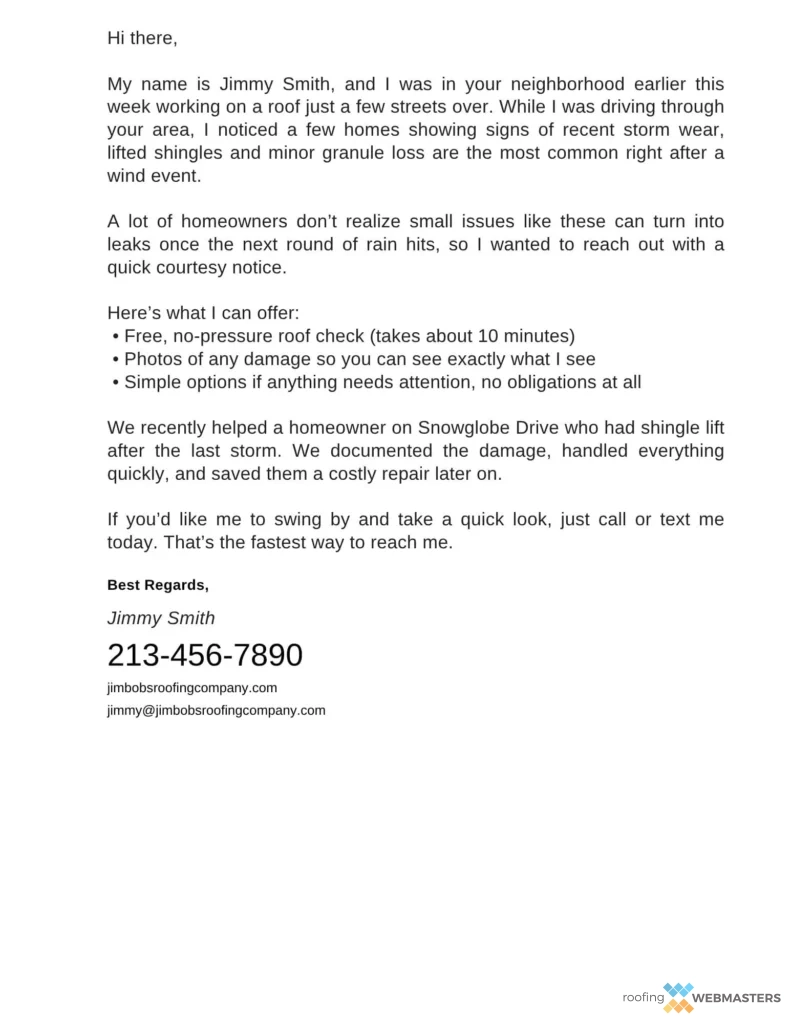
Below, I am going to outline the essential elements of an effective roofing marketing letter:


Roofing Marketing Letter Example

Clear and Legible Contact Information

Having worked with thousands of roofing companies over the past 15 years, one of the most common mistakes I see regarding sales letters is a failure to emphasize company contact information.

Your sales letter has no value if the homeowner cannot quickly read your information and make contact.

Make sure your phone number is large enough to be noticed and is mentioned multiple times. 

Aside from your phone number, your letter should also include your email address, website, and, if applicable, your business address in the footer.


Go Personal over Corporate

An effective roofing marketing letter should emulate a letter from a neighbor or a friend, rather than a corporation.

That’s why you want to avoid laborious introductions that brag about your business and community impact.


Instead, focus on straightforward conversational writing. Some examples include:


  • I was in your neighborhood and noticed some hail damage on your roof
  • I wanted to let you know this neighborhood was hit hard by last week’s hailstorm

This writing style compels the homeowner to keep reading, whether or not they ultimately take action.


Share a Relatable Example

In the spirit of emphasizing a personal touch, share a meaningful story about one of your other customers.


For example:


“Last month, we inspected an elderly couple’s damaged shingles after the hail storm. We are happy to report that we were able to save them thousands of dollars in repairs.”


The goal is to help the prospect envision their situation through the lens of a former customer who had a positive experience.


Have Multiple Touch Points

A single letter rarely generates a response from homeowners, which is why roofing companies must conduct multiple touchpoints to form a sequence.


For example:


  • Step 1: Leave a handwritten letter on the door
  • Step 2: Send marketing letter through the mail
  • Step 3: Send a follow-up letter 7 days later (through mail)

While you don’t want to come across as pushy, repetition is a proven factor in how often homeowners respond.


Leveraging Marketing Letters for Roofing Leads

A roofing marketing or sales letter still generates leads in 2026 when properly designed and used as part of a 3-step sequence.

The key is to come across as a friend or neighbor rather than a corporation, which appeals to the homeowner’s sense of community.

Concise letters that are to the point yield the best response rates, as most people immediately decide whether or not the letter is worth reading.


Remember this: Your contact information (especially your phone number) must be featured prominently on the letter; otherwise, it will fail to generate leads, even if the writing is compelling.

By following these guidelines, you can use roofing marketing letters to maximize your marketing footprint and increase lead generation in 2026


Posted: | Updated: Nov 13, 2025 | Categories: Uncategorized
  • expertise.com best seo agencies in fort worth
  • contractors of america best digital agency
  • roofers coffee partner
  • national roofing contractors association nrca partner
  • roofers guild accredited agency
  • roofers paradise best of award

Roofing Accidents Per Year (Updated Statistics)


Are you considering a career in roofing? Understanding the gravity of the safety risks in this industry is crucial. The statistics on workplace safety for roofing contractors are not just concerning; they’re alarming.

At Roofing Webmasters, we help both new and established roofing companies build their brands and attract more customers. However, we also understand the risks our clients take whenever they enter the workplace.

In the following article, we’ll delve into the statistics about roofing accidents, fatalities, and the inherent dangers of this industry. These statistics are not to be taken lightly, as they highlight the gravity of the situation.


How Dangerous is Roofing?

Roofing is one of the most dangerous industries for workplace accidents and fatalities. According to the Bureau of Labor Statistics, 134 roofers died within the last recorded year, resulting in a 51.8 work injury rate, the third highest among all industries.


Roofing Deaths Per Year

Nearly 115 roofers die per year, based on data from the past six years.


YearDeaths
2023134
2022124
2021115
2020108
2019111
201896
Average114.6

Source: Bureau of Labor Statistics


Deaths by Roofing Sector

Thirty-two residential roofers suffered fatal workplace injuries, along with 21 nonresidential roofers. That leaves 81 workers that fall into neither category. 

The remaining fatalities might include people working in the roofing industry as contractors, maintenance or laborers. Alternatively, some fatalities may be classified under broader occupational designations like building maintenance or construction.

SectorDeaths
Residential Roofers32
Nonresidential Roofers21
Other81

Source: Bureau of Labor Statistics


Discrepancies Between Industry and Occupation

The data on roofing as an occupation reveals slightly fewer fatal work injuries than the broader industry. In this case, roofing as an occupation resulted in 113 fatalities, 21 fewer than as an industry.


Death Rate for Roofers

Roofers have a fatal injury work rate of 51.8, which is calculated per 100,00 full-time equivalent workers. Although the rate decreased from the previous year, roofing remains the second most deadly civilian occupation after logging.


OccupationDeathsFatal Injury Rate
Logging workers5298.9
Fishing and hunting workers1986.9
Roofers11351.8
Refuse and recyclable material collectors4141.4
Aircraft pilots and flight engineers6231.3

Source: Bureau of Labor Statistics


Roofing Accidents Per Year

According to the Bureau of Labor Statistics, roofers sustained 7,100 total injuries or illnesses in the last recorded year, accounting for a 3.6 injury rate per 100 works. 

The total number of injuries increased by 16.39% from the previous year.


YearInjuriesRate per 100
20217,1003.6
20206,1003.3
Average6,6003.45

Source: Bureau of Labor Statistics


Nonfatal Accidents Per Year

Meanwhile, roofers sustained 6,900 nonfatal injuries or illnesses in the last recorded year, a 17% increase from the previous year.


YearAccidents
20216,900
20205,900
Average6,400

Causes of Roofing Fatalities

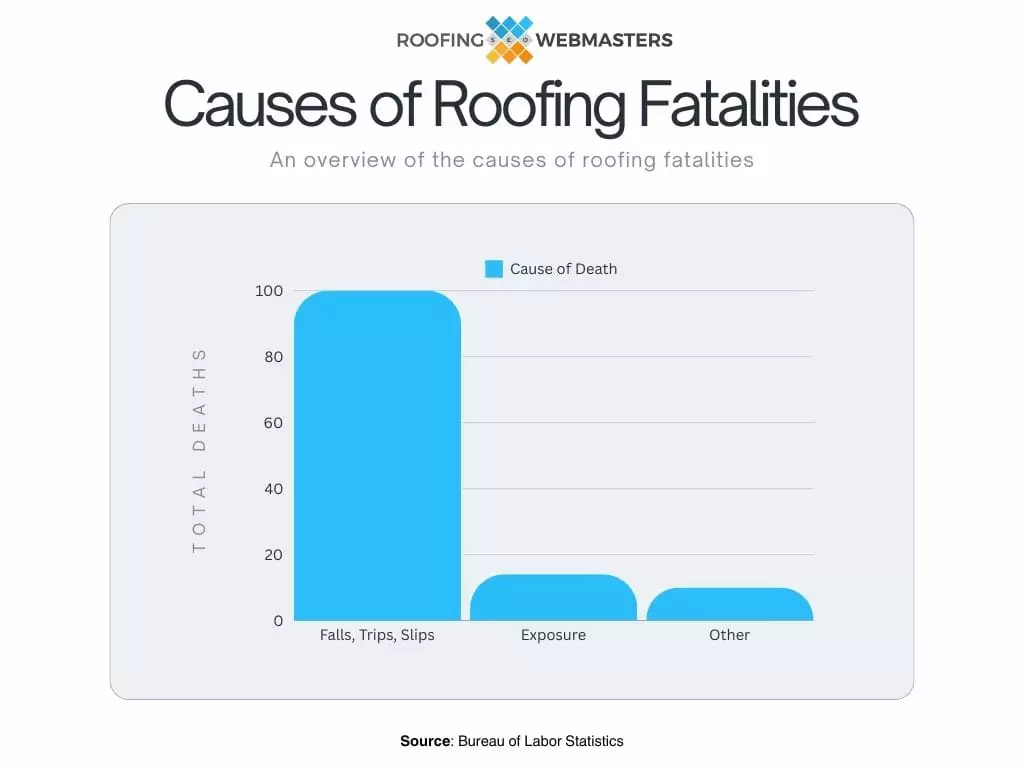
The same report reveals that 110 of the 134 roofing deaths came from falls, trips, or slips, which accounts for 82.9% of the roofing fatalities. Exposure to harmful substances or environments accounted for 18 of the fatalities.


Bar Graph Showing Causes of Roofing Fatalities Based on Public Data

Source: Bureau of Labor Statistics


Conclusion

The roofing industry presents workplace injury risks higher than most other professions. While a career in roofing can be profitable and gratifying, it’s important to understand the potential dangers of the job.

Exercising safety precautions is an intelligent decision for anyone in the roofing industry. However, they cannot entirely mitigate the risk of injury or death.


Posted: | Updated: Feb 12, 2025 | Categories: General
  • expertise.com best seo agencies in fort worth
  • contractors of america best digital agency
  • roofers coffee partner
  • national roofing contractors association nrca partner
  • roofers guild accredited agency
  • roofers paradise best of award

How to Start a Commercial Roofing Company/Business


Working as an employee is a great way to learn. But starting your own commercial roofing business produces a whole new level of gratification.

Many of the roofers I speak with are interested in transitioning into the commercial roofing industry, either by expanding their residential services or establishing a new LLC.

The truth is, it’s attainable to start your own commercial roofing company and generate commercial roofing leads if you follow the proper steps.


Key Takeaway

When starting a commercial roofing company, make sure to formulate a business plan, choose a memorable name, consult legal and tax professionals, anticipate seasonality, and invest in quality marketing.


How To Start a Commercial Roofing Company

Conduct Market Research

Google has given the world an abundance of free information at its fingertips. It would be beneficial to research the commercial roofing industry.

So much quality information is available that can be accessed from any device. At the same time, be wary of misinformation that could lead you down the path of most resistance.

Results on Google page one are likely to be reputable, but always consider the source and how trustworthy a website and its content seem to you at first glance.


Here are some search queries you’ll want to look at:


  • Equipment needed to start a roofing company
  • Starting a roofing business tips
  • How much do roofing company owners make
  • Roofing business plan
  • Cost to start a roofing company
  • How to start a roofing company in (your city, state)


Write a Commercial Roofing Business Plan

Before starting a company of any kind, you need to write a business plan. For someone without formal business training, the task can seem daunting and overwhelming from the jump.

Luckily, the World Wide Web provides roofers with resources at their fingertips to help streamline the process.

For example, the United States Small Business Administration has public documentation available to those looking to start their plan now.


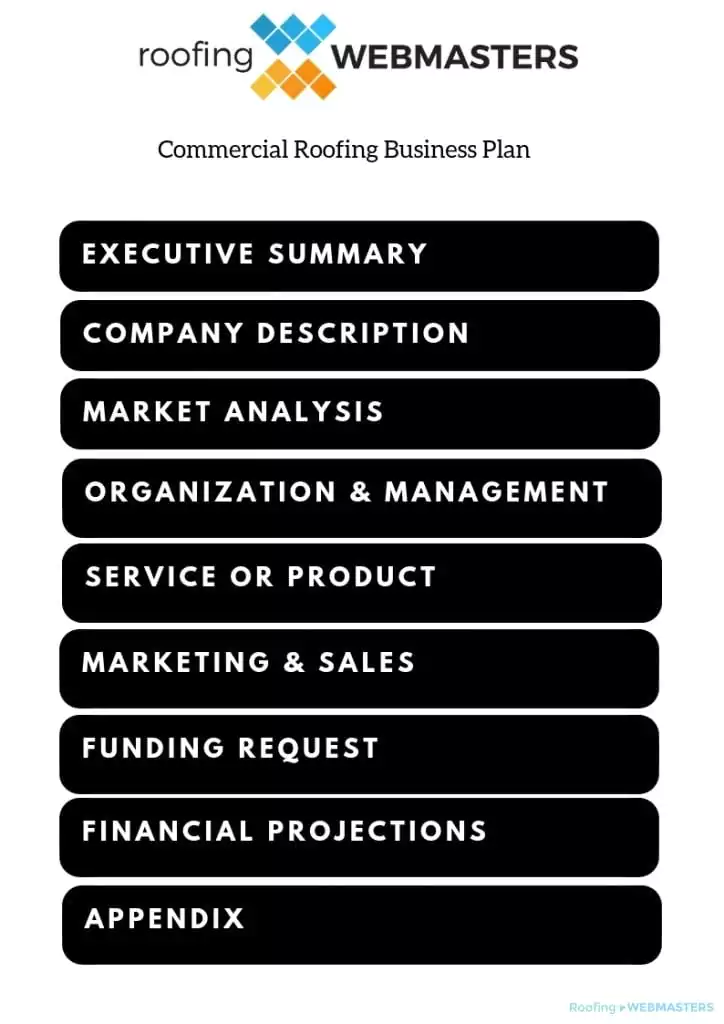
They suggest the following hierarchy:


  1. Executive Summary
  2. Company Description
  3. Market Analysis
  4. Organization & Management
  5. Service or Product
  6. Marketing & Sales
  7. Funding Request
  8. Financial Projections
  9. Appendix

Commercial Roofing Business Plan

Select a Commercial Roofing Company Name

Don’t overthink the name. Please keep it simple and representative of your industry. Sometimes, you can tie your geographic location with the name, but it is not required.

Also, try to frame your name in the context of a memorable domain name. That means it shouldn’t be too long.

When you cite your URL on business cards and digital citations, you want the consumer to be able to recall it on demand.

It also helps if it looks appealing on a truck wrap and other commercial roofing marketing materials.


Consider these aspects of a name:


  • Length: Keep it as short as possible
  • Memorability: Choose a name that consumers can easily recall
  • Relevance: Associate it with your industry, location, or a combination of both

Talk to an Attorney

Starting your own business will create extra legal issues you hadn’t considered. For this reason, you must talk to an attorney to discuss the legalities of owning and operating a business.

Much of it concerns property and work-site regulations, but you should also consider worker safety.

The last thing you want is to get sued for one of your employees slipping on an ice-filled roof during a restoration project.


Be aware of these potential legal issues:


  • Permits
  • Lawsuits
  • Regulations

Understand Your Tax Obligations

Now might be a good time to start your company because of tax breaks for commercial building owners. Still, you’ll want to consult a business accountant to ensure your model aligns with IRS standards.

For those of us who aren’t the strongest at mathematics, having a contact to handle your taxes can alleviate the stress of running a new business.

The good news is that as your taxes get more complicated, it indicates success for your business.


Consider these tax concepts:


  • Commercial Tax Breaks
  • IRS Regulations
  • Tax Windows (of Opportunity)

Anticipate Down Seasons

Depending on your region, you may have a significant down season as a roofing company owner.

You should have a plan in place to supplement your income during that time, at least until you are successful enough not to need it.

Residential roofers transitioning into commercial projects may find it easier. However, this can be one of the most challenging hurdles for a new commercial roofing business to overcome.


It can sometimes be discouraging enough to make you quit, but here’s why you shouldn’t:


  • Longevity: A temporary down season won’t threaten your long-term prospects
  • Perseverance: Because many quit for this very reason, sustaining yourself makes you rare
  • Supplementation: There are other areas in which you can supplement your income during your initial years

Learn Salesmanship

You’ve probably never had to make a roofing sale as an employee. As an owner, you will have to become excellent at doing so. Consumers can detect BS better than ever before. For that reason, getting to the point is your best course of action.

Another piece of advice is to listen to the prospective client and get a concrete idea of their needs so that you can explain precisely how you’ll meet them and why your company can do so.

If you lack direction or confidence in sales, consulting with a roofing business coach can be helpful.


Focus on the following sales concepts:


  • Cut the BS: The modern consumer is too intelligent for snake oil salesmen
  • Listen to the Client: Consumers want to feel heard and value reciprocated concerns
  • Make a Final Impression: Consumers most remember the latter part of the interaction
  • Invest in Self-Care: Keep a positive attitude since you will be rejected regularly

Hire a Marketing Company

Before you can sell, however, you need leads in the form of phone calls, contact form submissions, and emails. The best way to get each of these is by investing in a marketing company for roofers, like Roofing Webmasters.

Digital marketers should cover services such as SEO, Web Design, PPC, DataPins, and Content Marketing.


For more details on the most effective marketing tactics, see below:


  • Content Marketing: The promotion of branded content on your website
  • PPC: The investment in paid advertising on Google Ads, Facebook Ads, and elsewhere
  • SEO: The process of earning higher rankings on Google
  • AI: The process of appearing in AI-generated answers on ChatGPT and other platforms
  • DataPins: The showcasing of recent jobs with consolidated E-E-A-T signals
  • Web Design: The creation of a custom-branded website for engagement and conversion

Moving Forward With Your Commercial Roofing Business

Starting a new business can be intimidating, especially when you are used to working for someone else. While the initial months will feel overwhelming, the subsequent gratification is immeasurable.

Getting into commercial roofing is one of the most intelligent business decisions for a roofing contractor. The Roofing Webmasters team can help you achieve your goals and build a sustainable brand.


  • expertise.com best seo agencies in fort worth
  • contractors of america best digital agency
  • roofers coffee partner
  • national roofing contractors association nrca partner
  • roofers guild accredited agency
  • roofers paradise best of award

Google Ads (Guide) for Roofers (with 8 Tips for 2025)


I’m Nolen Walker, the founder, owner, and CEO of Roofing Webmasters. Over the past fifteen years, I’ve worked with thousands of local companies on Google Ads for roofers.

My decade-plus experience with Google Ads has given me unique insights into how roofers can best utilize them to grow their business, maximize revenue, and increase lead generation.

The guide below will outline specific strategies, examples, and recommendations based on my first-hand experience working with roofing companies in small towns, large metro areas, and anywhere between.


Google Ads for Roofers (Guide Cover)

Key Takeaway

Google Ads allows local roofers to buy advertising space on Google search results above the traditional organic listings.


Introduction to Google Ads for Roofers

Google Ads is a digital advertising platform on which roofing companies can buy ads in Google search results, generating clicks from targeted consumers.

Google Ads for Roofers allows local businesses to reach homeowners who search for keywords like “roof repair near me” or “roof replacement services.”

When properly implemented, Google Ads can be a powerful promotional tool for roofing companies and yield a significant ROI.


The Appeal of Google Ads for Roofing Companies

Since most homeowners who seek roofing services do so with urgency, Google Ads presents an effective avenue to reach them when they most need your services.

Google Ads contrasts with SEO, or search engine optimization, in that it works immediately and can start bringing in calls the day your campaign is launched.

Consequently, Google Ads are helpful for both established roofing companies looking to expand their market and newer businesses looking to generate leads quickly.


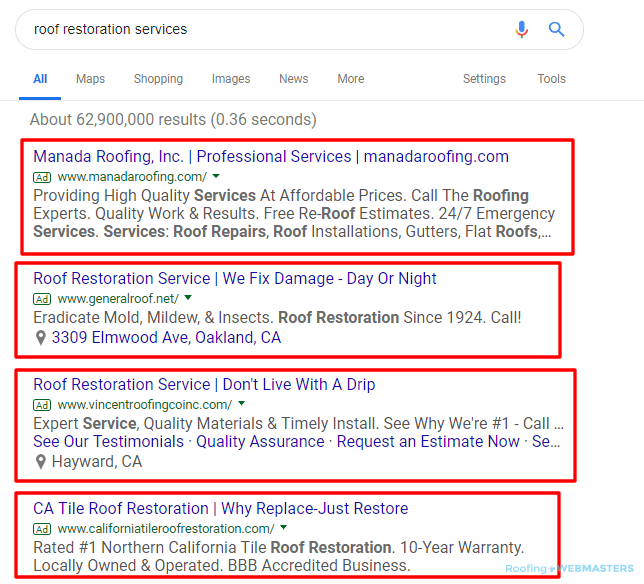
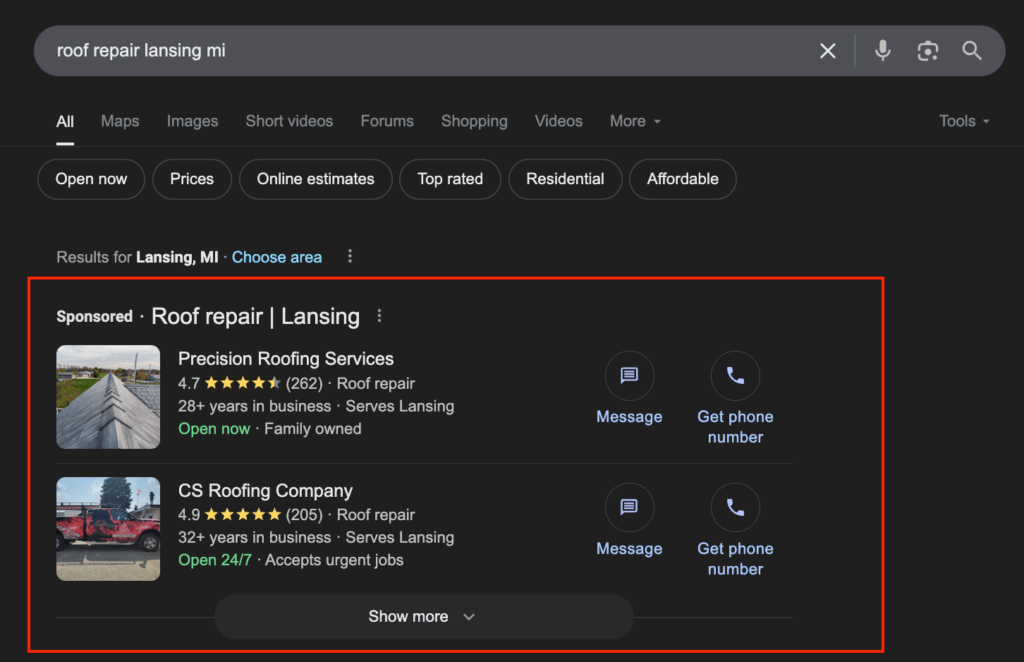
Roof Restoration Google Ads (Screenshot)

How Google Ads Work for Roofing Companies

Each time a user performs a relevant search, Google’s Ad platform calculates which ads to show in which order based on the following criteria:


  • Bid: How much the advertiser is willing to pay for a click
  • Quality Score: A 1-10 scale measurement for ad relevance, expected CTR, and landing page intent match
  • Ad Extensions: Your ad’s inclusion (or not) of ad extensions for improved visibility

Each factor is considered to define a final Ad Rank, which ultimately decides if and where your ad is shown for a particular query.

As a result, if a larger roofing company outbids your maximum bid, you can still close the gap by presenting a superior user experience through your quality score landing page and ad extensions


Google PPC Ads for Roofing Companies

Types of Google Ads Relevant to Roofers

Google offers various ad types within its advertising platform, each serving a different goal for roofing companies.


Below I will list the ad types that are most relevant to local rofoign companies seeking qualified leads:


  • Local Service Ads (LSA): This is Google’s pay-per-lead advertising model, which allows your Google Business Profile to appear within local searches with a “Google Guaranteed” badge.
  • Search Ads: These are text ads that emulate organic results and are triggered by traditional keyword searches.
  • YouTube Ads: These are video ads within the YouTube platform (owned by Google) that target homeowners as they watch relevant videos.
  • Smart Campaigns: Google’s automated bidding and targeting system is helpful for novice roofers but lacks the ideal control measures to maximize your ad spend and budget.
  • Display Ads: These are banner ads within Google’s Display Network, which is useful for expanding brand awareness but has a much lower conversion rate than LSA or search ads.

Roofing Advertising Example from Google LSA in 2025

Google Ads Budgeting for Roofing Contractors

A standard roofing PPC click ranges from $8 to $45, depending on the keyword and location. Considering this, here are my budget recommendations:


Beginner Budget: $1,500-$2,000 per month (ideal for midsize markets)

Established Budget: $5,000-$10,00 per month (suitable for established roofers in large metros)


Let’s say your cost per click (CPC) is $20 with a 5% conversion rate. Here are your results:


  • Cost per lead: $400
  • Average roofing job profit: $9,000
  • Average ROI: $8,600 per lead

How to Estimate Leads and Revenue

Local roofers can estimate leads and revenue from their Google Ads campaign by calculating standard performance metrics with their budget. For example:


  • Monthly Budget: $3,000
  • Average CPC: $25
  • Clicks: 120
  • Lead Conversion Rate: 7%
  • Leads: 8.4
  • Booking Rate: 60%
  • Booked Jobs: 5
  • Average Job Revenue: $10,000
  • Estimated Total Revenue: $50,000

Your location, budget, and ad relevance will cause these estimates to fluctuate.


Google Ads Benefits for Roofing Companies

Google Ads introduces various benefits for local roofing businesses. Below, I will outline some of the most appealing advantages of investing in Google advertising.


Instant Gratification

I’ll be honest: Roofers who seek instant gratification are more likely to fail than those who are brand-focused, but Google Ads absolutely quenches their thirst.

Unlike SEO and brand-building, which can take months and years to refine, Google Ads deliver instant results.

This can be good or bad, depending on how you leverage the results to expand your roofing business and build a sustainable, long-term brand.


Investment Scalability

Most business owners like the concept of scalability, and Google Ads provides that by allowing roofers to set their budget, which might range from $500 per month to $5,000 per month or even more.

Unlike SEO, which makes it harder to attribute investment to ROI, PPC makes it easy. This cuts both ways, as you know, when it also drains your budget.


Organic Supplementation

My agency is focused first and foremost on organic SEO results, which are cheaper and more sustainable than paid ads.

However, Google Ads can supplement SEO even for companies that’ve earned high organic rankings because they further legitimize your brand and present a halo effect to Google searchers.


Downsides of Google Ads for Roofing Companies

If Google Ads sounds too good to be true, it’s because, in many cases, they are, especially when black-box billing agencies use the platform to hold your roofing company hostage and force long-term reliance on paid platforms.


Below are some of the most alarming downsides of Google Ads for local roofers:


Budget Mismanagement

PPC agencies may mismanage your Google Ads budget, burning through several thousand dollars with limited or zero results.

About 80% of the roofing companies I’ve worked with over the past 15+ years have experienced PPC mismanagement from an incompetent or corrupt agency.


Gig Economy

Reliance on Google Ads for roofing leads keeps your company in the gig economy, preventing a sustainable business model built on branding and organic engagement.

Many PPC-first agencies want to suppress your brand because it keeps you reliant on unethical companies like them, which benefit from your lack of growth.


Competition

Every roofer and their brother knows about Google Ads, as it is one of the most competitive industries for PPC.

Google Ads generates more than 65 billion in revenue, which makes it an easy target for unethical agencies that understand the lure of instant gratification.


Poor Lead Quality

Even the best Google Ads leads are worse than organic roofing leads because the users have less psychological investment in your brand.

Local Service Ads (LSA) tend to provide the best lead quality among paid options, but organic SEO and Google Maps leads are still vastly superior.


8 Helpful Roofing Google Ads Tips for 2025


1) Leverage Negative Keywords

Roofers tend to overlook negative keyword optimization, excluding irrelevant terms within your keyword targets.

For example, a Dallas-based roofer could exclude terms like “Fort Worth,” “Roofing Estimate Templates,” and “DIY Roof Repair,” all of which attract clicks from the wrong types of users (ones who don’t need your services).

I recommend updating your negative keyword list weekly from the Search Terms report so you can maintain an efficient budget and produce a sustainable ROI.


2) Use Geo-Targeting for Location-based Advertising

I always tell Roofing Webmasters’ clients that targeting an entire state is a bad idea, not just for SEO but also for paid advertising.

You can use Geo-targeting to target specific zip codes and city names within your service area (typically a 25-mile radius from the city of your business address).

Google Ads allows roofers to target specific neighborhoods, such as those hit by recent hailstorms or with high property values, to book larger jobs.


3) Set an Ad Schedule

As a roofing contractor, you know that lots of your calls come on weekends and after-hours during weekdays.

That’s why it makes sense to increase bids on Sundays and to pause ads from 1 to 6 AM. In addition, you can implement automated rules to increase bids during peak hours.


4) Improve Lead Quality With “Friction”

Casting too wide a net with your Google Ads campaign can result in low-quality leads and even spam.

You can solve this by introducing “friction,” which is the practice of increasing the standards a user needs to meet to submit a lead form.

Examples include adding a phone number section to your lead form so spam users who only have a fake email address will be filtered out of submissions.


5) Boost Relevance with Ad Extensions

Google tends to prioritize ads that utilize ad extensions, which include site links, callouts, structured snippets, call extensions, and location extensions.

I recommend that roofing companies use each of these extensions with their ads to increase their chances of showing up for relevant queries.


6) Optimize Local Service Ads (LSA)

When new roofing clients ask me about Google Ads, I quickly recommend Local Service Ads (LSA), which work well when properly optimized.

The first step is going through Google’s verification process, which includes a background check.

From there, it’s a matter of accumulating enough Google reviews to earn trust and quickly responding to leads because Google measures your responsiveness rate.


7) Measure Ad Performance

Google Ads is not a set-and-forget platform, and roofers should regularly measure and monitor ad performance, which can be done using UTM tags and Google Analytics.


Make sure to track the following metrics:


  • Conversion Rate
  • Cost Per Conversion
  • Click Through Rate (CTR)
  • Impression Share
  • Landing Page Bounce Rate

8) Run A/B Tests

Running a single roofing ad is a widespread mistake because it fails to reveal the opportunity cost of other potential ad styles or adjustments.

I recommend creating multiple ads so you can run A/B tests and make data-driven decisions about which ads perform best.

Test headline variations, the tone of your CTA, and your display URLs, all of which make more of a difference than you might guess.


Common Mistakes to Avoid in Roofing PPC

As the owner of a roofing marketing agency, I’ve heard all of the horror stories about PPC mistakes from my roofing clients (usually at the hands of their previous agency).

I want to prevent you from making those mistakes, so be sure to look out for the following:


Using Your Homepage as Your Landing Page

Your website homepage is suited for SEO, social media, and direct visits, but not for Google Ads conversions.

Instead, you should create a dedicated landing page that precisely matches the intent of your ad.

Unfortunately, many roofing companies still make the mistake of sending all ad traffic to their website homepage, reducing conversions and wasting money.


Exclusively Running Broad Match Keywords

Another common mistake is running broad match keywords exclusively, making your ad appear for low-conversion terms that drain your budget.

Broad match keywords can increase your cost per click and lower your quality score, both of which reduce the ROI of your ad campaign.

When using broad match keywords, utilizing the negative keywords feature to exclude irrelevant terms is essential.


Not Considering Mobile Device Performance

Roofers might create the perfect landing page on a desktop computer but forget to check how it looks on a smartphone.

Most of your clicks will come from mobile users, which can significantly reduce your conversion rates and torpedo your entire campaign.

Ensure your landing page is optimized for mobile devices to avoid a misalignment between your expected ROI and your actual results.


Best Tools to Improve Roofing Google Ads Campaigns

Several PPC tools are available for roofing companies seeking an additional advantage over competing advertisers. These tools allow them to optimize their Google Ads campaigns better.


Below are some of the most highly touted tools to improve Google Ads performance for roofers:


Google Keyword Planner

Google Keyword Planner helps roofing contractors identify high-conversion roofing keywords and estimate their cost-per-click (CPC).

This Google tool is outstanding at helping roofers find relevant keyword ideas and map out their budget based on competition and search volume.


CallRail

CallRail allows local roofers to track phone calls from Google Ads and record them for easy access.

This way, roofers can identify which keywords and campaigns generate qualified leads and which generate spam.


SpyFu

They say imitation is the sincerest form of flattery, and SpyFu allows roofers to view competitor campaigns so they can replicate their strategies.

SpyFu allows subscribers to view the keywords and copy used in specific roofing ad campaigns, allowing contractors to reverse-engineer successful campaigns.


Google Analytics 4

Google Analytics 4 (GA4) is a great platform for measuring a user’s behavior after they click on your referral ad.

For example, it reveals how users navigate your landing page, including how long they stay and whether they convert by filling out a form or clicking on a “click to call” phone number.


Moving Forward with Google Ads for Roofers

I won’t lie to you and say Google Ads is the answer to all of your roofing lead generation problems. However, when properly optimized and controlled, Google Ads can benefit your roofing business.

I’ve been running Roofing Webmasters for 15+ years, so I know that Google Ads work best when combined with SEO, DataPins, and digital branding.

My agency helps roofing contractors combine these tactics to create brand synergy, maximize ROI, and encourage long-term sustainability.

If you want to increase your profits in 2025, running Google Ads for roofers can undoubtedly play a role.


Posted: | Updated: May 28, 2025 | Categories: PPC
  • expertise.com best seo agencies in fort worth
  • contractors of america best digital agency
  • roofers coffee partner
  • national roofing contractors association nrca partner
  • roofers guild accredited agency
  • roofers paradise best of award

9 Qualities of The Perfect Roofing Landing Page


Creating the perfect roofing landing page requires experience, testing, and savviness developed over years of digital marketing campaigns.

At Roofing Webmasters, we’ve crafted tens of thousands of landing pages for roofers over the past decade and have collected valuable data regarding landing page performance.

The following post will outline the best qualities of a landing page.


Roofing Landing Page (Blog Cover)

So much of our time in digital marketing is spent trying to sway people in the direction we desire.


Consider the following landing page calls to action, for example:


  • Call Now!
  • Subscribe to Our Email!
  • Get Your Free e-Book! 
  • Schedule a Free Inspection!

Considering the inescapable volume of advertising and other marketing noise we hear daily, it’s no wonder that most of these calls to action fall on deaf (or overtaxed) ears.

That’s why a well-crafted roofing landing page is so important for cutting through the noise and communicating with would-be clients.

Today, we’ll dig into constructing a winning landing page design (or reoptimizing an existing layout). 


Key Takeaway

Landing Pages are Designed to Target a Specific Audience Coming From Specific Marketing Channels.


What is a Roofing Landing Page?

Landing pages are specialized and (often) temporary pages designed for the consumer’s place in the sales funnel. With capable planning, they often enjoy higher conversion rates than traditional website copy. 

Of course, their lead-generating power makes them a heavily used tool for advertisers and digital marketing companies.


Best Roofing Landing Page Qualities

Sometimes, a business needs a consumer to see a specific message, service, or offer without the distraction of other website materials.

Many companies achieve this by creating links, ads, and other hyperlinked objects that transport the potential customer to a simple page with a focused message.

That page typically has a header, imagery (or video), short text, a compelling offer, and a call to action.


So, what qualities make a perfect roofing landing page?


Quality #1: It Has a Clear Purpose

It’s easy to jump straight to goal-setting, click-through rates, and higher subscription lists. Try to begin your roofing landing page with a one or two-sentence goal.

Think about what you are trying to get out of this project. Don’t even worry about key performance indicators at the very beginning.


Here are some examples of a landing page vision (or mission):

  • “I want to earn more metal roofing sales.”
  • “I want to convince more people to come to our business for maintenance work.”
  • “I want to generate exposure for a new service I’m offering.”
  • “I want people to see our wide list of roofing material options.”
  • “I want potential customers to think about our brand more often.”

Decide what you want from your landing page ahead of time. Obviously, it should coincide with your company’s long-term goals.

It should also naturally link to whatever channel your potential clients are using, which leads to our next point.


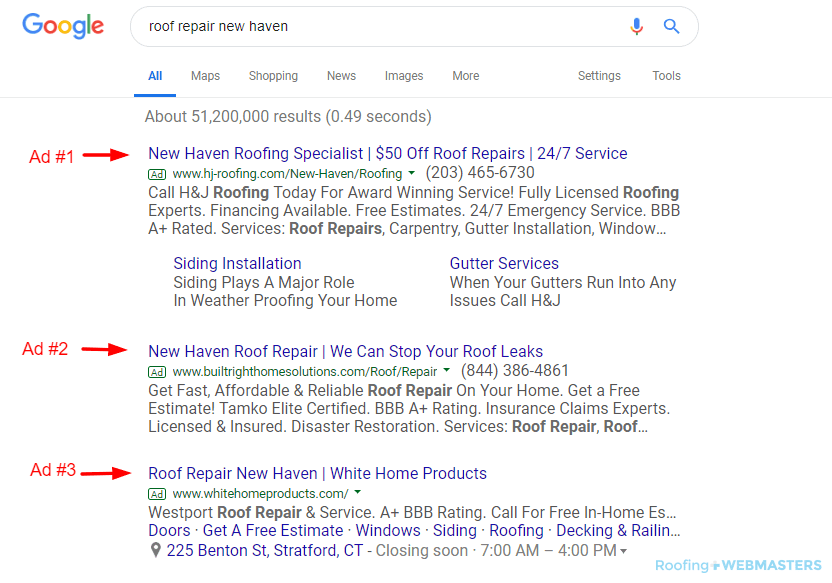
Google Ads are a Common Origin Point for Landing Page Traffic.


Quality #2: It Fits the Source & Audience

Where is your landing page traffic originating from?

This extends a little beyond the design of the actual roofing landing page, but consider where people are coming from when they land on this special page.

Is your target audience scrolling through their Facebook or Instagram feed when they haphazardly click on an ad? Are they coming from a Google Ad after searching a related term?


As you design your landing page, consider its traffic source(s) and how rushed, interested, and/or familiar the associated audience is with your business.

For people coming from a more casual social media source, you may need to shorten the content, include flashier imagery, and require less information.

Then again, you might take a little more time to discuss an offer if you’re confident your audience is already interested.


Quality #3: It Uses a Compelling Header

What’s the first thing you notice when you enter a website? The logo might be the first thing, but the header likely caught your attention first.

When it comes to landing pages, your header must instantly convey what the page is all about. The best headers focus on the potential client’s benefit, establishing their stake in the future offer.


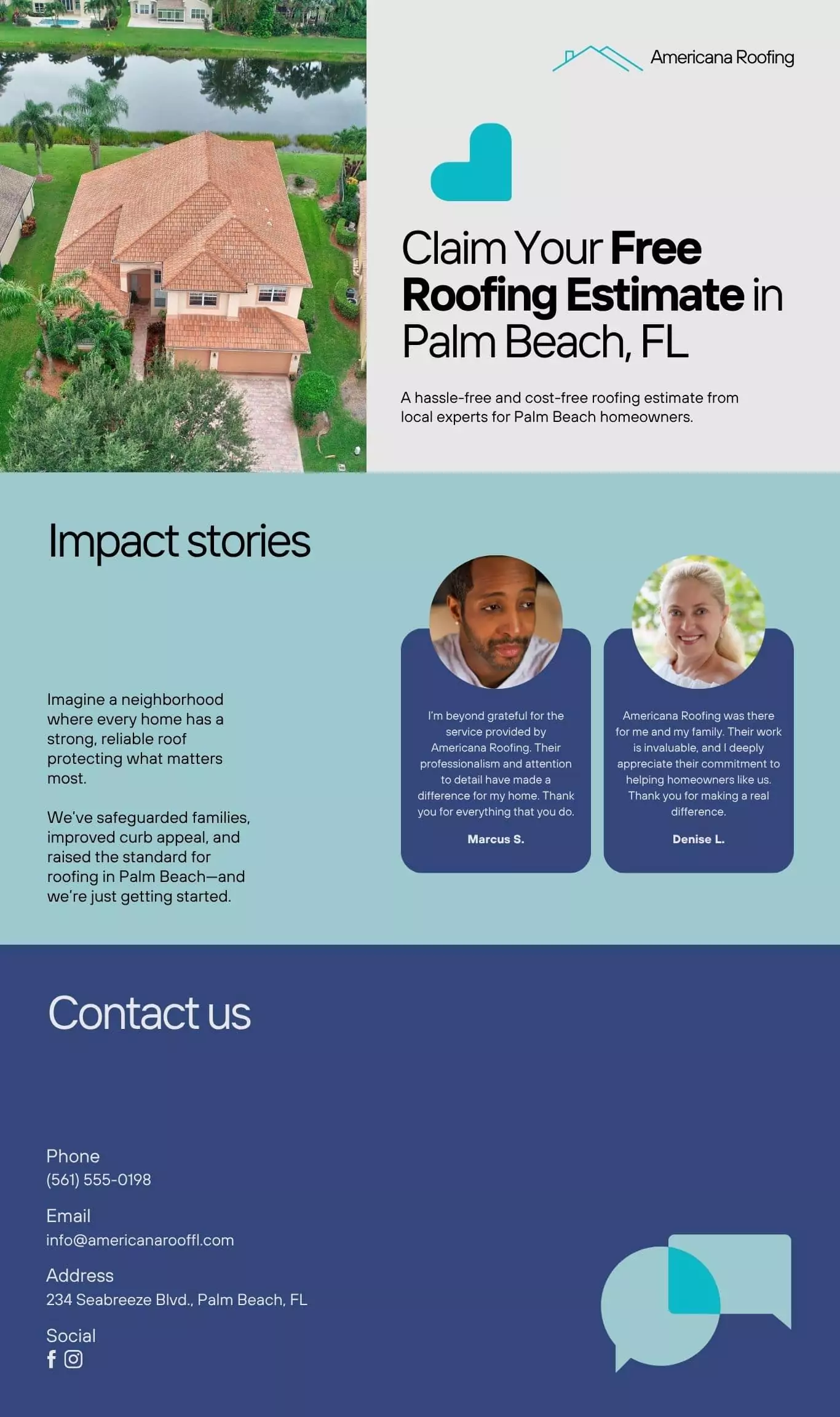
An Effective Roofing Landing Page Immediately Draws the Eyes to the H1 Header.


A compelling header communicates the main purpose of the page and draws the eye to your offer’s starting point.

From there, your roofing landing page can begin conveying whatever offer and benefits you wish to present to the audience.

Notice how naturally your eyes fall to the lorem ipsum text and the two calls to action.

However, a weak or overly cheesy header can put a bad taste in their mouth, so don’t focus too hard on being clever. 


Quality #4: It Stays Focused in the Copy

Landing pages are meant to be short, concise, and to the point. Many businesses make the mistake of overly selling their brand or their services.

While you need to convey exactly what’s included in the offer, effective copy also continues the focus on user benefits. It emphasizes your target audience’s pain points, your role in addressing them, and how they can respond.

Your copy is also the perfect place to connect with each reader personally. 


As Hubspot’s Christina Perricone puts it, “Compelling copy also speaks directly to the visitor by using ‘you’ and ‘your’ to make them feel engaged.”

As you or your marketing team writes your roofing landing page, take a moment to empathize with the reader and acknowledge their feelings in the situation.

Finally, wrap all those pain points and desire for relief into a final solution statement that leads to your call to action. Speaking of calls to action…


Quality #5: Its CTA Offer Matches the Effort Required

Have you ever started to fill out a survey (for your local grocer, restaurant, etc.), then quit after realizing it would take 15 minutes?

Carry that same mentality into your design process as you craft the perfect roofing landing page! Whether you decide to ask for a full email form or a simple call, make sure you have a tempting offer waiting on the other end. 

Remember this rule of thumb: if the reward is greater than or equal to the effort, then adoption rises.


A Free Estimate Offer Involves Very Little Participant Effort, Increasing The Likelihood of Completion.


A free project estimate reduces “friction” because it is available without directly calling the contractor.

An interested homeowner or business can ask for an estimate, and the roofer will get back to them. In return, the contractor receives both the potential client’s number and email.

That’s a win-win scenario for both parties involved!


Quality #6: It Uses an Authoritative Call to Action

You don’t see many landing pages taking a passive stance on your involvement. “Hey, if you feel like it, you can click this button and maybe call our team. You know, if you feel like it.” There’s a good reason for this:

People actually like being told what to do.

It’s true. While many people are naturally wired to resist authority, everyone desires a measure of direction.


Online readers appreciate instructions just as we appreciate highway lane divisions and drive-thru arrows.

Remember, many of the people on your roofing landing page want to be there! Simple directions help them find the relief they need.


A Strong CTA for Roofing Companies Includes Urgency, Clarity, and Direction.


A call to action is most effective when the pain points have been carefully touched on in the preceding copy.

Use the same level of conviction as you link your copy and call to action together.

Your roofing services solve some of the most frustrating situations that homeowners will ever encounter, so don’t be afraid to take authority.


Quality #7: It Incorporates Vivid Images

What your roofing landing page readers feel is just as important as what they learn.

While stirring copy certainly paves the way towards your reading clicking through, you’d be amazed at how much faster images communicate the subject!

Since your landing page readers don’t have time to read 1000 words (as the adage goes), an image is worth even more. 


Find Applicable Stimulating Images That Either Touch on Pain Points or the Solution!


Images provide useful tools for creating space around your text blocks and then focusing attention on the call to action.

If you’re torn between two or more high-quality photos, feel free to test them all out and see what works best. The great thing about landing pages is that you can always update and reuse them for future projects!


Quality #8: It Eliminates Distractions

We’ve touched on this a couple of times already, but it’s a point worth dialing down on. Distraction is the enemy of conversion!

If your readers are too busy trying to read through a list of links instead of reading through your offer, the entire purpose of your roofing landing page has been defeated.

Homepages rarely make for fitting landing pages!


A Great Homepage Might Be Too Distracting or All-Encompassing to Serve as a Compelling Roofing Landing Page.


While a well-designed homepage will convert brand searches or even main category searches like “Roofer near me”, it might be too distracting to function as a high-conversion landing page.

Ideally, there should be only one (or a maximum of two) calls to action that are clearly indicated by the surrounding page elements. 

For specific PPC queries, a minimalist design that addresses the precise user intent makes a better landing page.


Faded Images Can Support the Call to Action Button Without Distracting From It.


Quality #9: It Changes as Needed

It’s relatively simple to design the perfect roofing landing page. However, goals, audiences, and markets change over time. What works (or doesn’t work) one day can change month to month!

The ideal landing page can be easily adapted to target new audiences and support new marketing channels, so don’t feel overly committed to one particular call to action or image.


Roofing Landing Page Design Services

According to reports, Google Ads alone earned over 264 billion in revenue. Clearly, businesses have faith in the power of advertising.

However, only 33 percent of consumers trust that brands can provide the exceptional customer experience they crave (Exploding Topics).

If your company can learn to better serve potential clients with tailored ads and simplified shopping, you’ll be one step closer to creating the exceptional experience consumers admire so much! 


Our team at Roofing Webmasters would love to help you develop deeper client relationships and earn sustained growth for your company.


Posted: | Updated: Jul 8, 2025 | Categories: PPC
  • expertise.com best seo agencies in fort worth
  • contractors of america best digital agency
  • roofers coffee partner
  • national roofing contractors association nrca partner
  • roofers guild accredited agency
  • roofers paradise best of award

The (#1) Roofing Website Builder for Local Roofers in 2025


At Roofing Webmasters, publishing high-quality roofing websites is our specialty. Still, contractors want to know about website builders, what they are, and how they can help increase their online presence. 

As a result, The Webmasters produced a website builder called DataPins for our clients. But before we delve into what DataPins can do for local roofing websites, you should first understand website builders in general.


Blog Cover for Roofing Website Builder

What is a Roofing Website Builder?

A roofing website builder is a program or platform that enables you to create a professional-looking website manually without prior coding experience.

Many site builders have gained popularity as business owners opt to handle digital marketing tasks themselves rather than investing in professional roofing website design.


Best Website Builder for a Roofing Company

Roofing Webmasters with DataPins is the top website builder for roofing companies in 2025.

DataPins enables roofing contractors to publish completed jobs on relevant city and service pages automatically. Performing your regular work results in thousands of optimized web pages for local roofers.


Other Website Builders for Roofing Businesses

Although Roofing Webmasters is the clear-cut #1 website builder for roofing businesses globally, other options exist for contractors looking to perform DIY website design.


You can see a complete list below:


WordPress

WordPress powers nearly half of all active websites, making it the most popular website design platform. However, WordPress.org differs from WordPress.com in that it serves as a DIY website builder.

WordPress.com is a self-hosted platform, while WordPress.org is a content management system with open-source design capabilities. Using the CMS typically requires professional design assistance or, at the very least, a WordPress theme.

The WordPress CMS also integrates with compatible third-party website builders, such as Elementor. Plugins alone make WordPress a CMS one of the best platforms for building a roofing company website.

Conversely, WordPress.com does not require a separate hosting account, and the interface is a simple drag-and-drop. Despite its ease of use, WordPress.com has more limitations than its CMS counterpart.

Consider that many top global websites, including Microsoft and WhiteHouse.gov, use WordPress CMS. Local contractors can’t go wrong with choosing WordPress to publish their business websites.


Wix

You have probably seen commercials for Wix, a well-known website builder that relies on cloud hosting. Wix is one of the simplest builders available to roofing contractors. Over 3% of all websites use Wix.

A primary Wix benefit is its complete hosting, which precludes roofers from purchasing a different hosting plan. Additionally, Wix offers several hundred template options for businesses to choose from for their new website.

Like WordPress plugins, Wix provides app options, both free and paid, that help enhance your site template. Some come from 3rd party developers, while others come directly from Wix developers.

Wix offers a free plan for budget-conscious contractors that limits both storage and bandwidth. Still, the free program allows companies to assess the platform’s capabilities risk-free for their online presence.

Additionally, free users can easily upgrade their plans to access more advanced features.

One significant downside of Wix is that you can decide to leave the platform for WordPress or another website builder. Moving a Wix website is a massive pain.

Most webmasters end up redesigning their entire website rather than going through the trouble.


Squarespace

Like Wix, Squarespace is a user-friendly website builder that allows roofers to craft a professional-looking design in minutes.

Though it lacks WordPress’s advanced customization tools, Squarespace is easy to use. About 2.2% of all websites use Squarespace.

Squarespace comes with world-renowned hosting that allows roofing companies to focus on publishing content and increasing conversion rates.

Additionally, the platform provides a diverse range of template designs, allowing users to utilize multiple templates simultaneously.

Squarespace simplifies content editing by providing editable templates. Users can point their mouse anywhere on the template and begin typing their content, as well as drag elements anywhere on the page.


One major downside to Squarespace is its lack of integrations.

Unlike WordPress, which offers the ability to connect with a whole host of third-party enhancements, Squarespace relies heavily on its own framework.

The good news is that roofing companies can claim a Squarespace website for as little as $16 per month (when billed annually), with the option to upgrade to more advanced plans for additional features.


Weebly

Weebly is a highly regarded website builder for roof contractors, offering a range of designs, templates, and functionalities.

As a result, the everyday internet user can easily design a professional-looking roofing website with zero coding experience.

Like Wix and Squarespace, Weebly is fully hosted, meaning roofers won’t need to invest in a hosting account from a 3rd-party provider.

Additionally, it comes with an excellent selection of templates, allowing contractors without coding experience to shape the visual components of their website.

For example, Weebly features built-in contact forms, sliders, and photo galleries, allowing roofing contractors to customize the site’s appearance manually. Beginners will find Weebly especially easy to use.


Weebly offers a basic free plan, which users can upgrade at any time.

However, keep in mind that free plans automatically display ads for Square on your website, which may deter some roofing companies from opting for a free plan.


Duda

Duda stands out from most other website builders because it is fully white-label. Its features also focus on SEO-friendly strategies to empower DIY website designers to produce a high-ranking roofing company website.

Duda comes with AWS hosting, with paid plans ranging from $19 to $52, depending on the number of websites you need.

For example, as a roofing company, you probably only need one site, in which case you can pay $19 per month.

Duda offers numerous high-quality features, including custom widgets that can be easily dragged and dropped throughout your website.

Like Weebly, Duda offers custom contact forms and click-to-call buttons to increase conversions.

Editing content on Duda is more complex than on WordPress, although it remains relatively simple. However, you will need to add a separate block for images, which can make pasting content from another file a bit of a pain.

Still, Duda is a great option for local roofers looking to publish a website online.

Additionally, DIY website designers will find the drag-and-drop functionality helpful, allowing them to easily insert contact options and increase leads and customers.


Web Hosting for Roofers

Most website builders, including DataPins, Duda, Wix, Weebly, and WordPress, offer built-in web hosting plans for convenience, enabling users to manage all their website tasks through a single platform.

While convenience is undoubtedly a consideration, roofing companies should be aware that there are advantages to separating web hosting from website builders, including a more straightforward export process if you ever choose to switch platforms.

With DataPins, roofing contractors get the best of both worlds, as the web hosting is included with your plan but separated on the back-end, allowing you to easily transfer your website design to another host should you ever choose to “buy out” the design after 12 months of service.


Website Builder FAQ

As a local contractor, you probably have many questions about website builders and their proper use.

The good news is that Roofing Webmasters has decades-worth of experience producing roofing websites that rank.


Below are some of the most frequently asked questions about website builders.


Do Website Builders Limit SEO?

Some website builders limit SEO potential while others enhance it. For example, Roofing Webmasters with DataPins or WordPress virtually guarantees a strong SEO presence.

However, Weebly and Wix both present SEO limitations.


Do Professional Web Designers Use Website Builders?

Most professional designers use WordPress CMS as the framework of their websites. Still, professional coding skills and knowledge are required to produce custom WordPress websites, templates, and themes for roofers.


Are Website Builder Templates Penalized for SEO?

Google publicly states that templates and themes are not subject to penalties, such as duplicate content.

Therefore, people who suggest that website builders are duplicate content are misinformed or are intentionally trying to disparage the use of website builders.


Are Website Builders Cheaper Than Professional Services?

Website builders cost less than professional web design services in almost every case. However, some amateur designers will create websites for free.

Still, your ultimate investment should depend on your business’s current position and available marketing resources.


Do I Need a Domain Name for My Website Builder?

Many website builders provide free subdomains, but every roofing company should purchase an exclusive domain name.

Subdomains, such as roofcompany.weebly.com, significantly limit search engine optimization. Therefore, owning your own domain name is critical to your online marketing.


Posted: | Updated: Sep 9, 2025 | Categories: web design
  • expertise.com best seo agencies in fort worth
  • contractors of america best digital agency
  • roofers coffee partner
  • national roofing contractors association nrca partner
  • roofers guild accredited agency
  • roofers paradise best of award

How To Write a Good Review for a Roofing Company


good roofing company review includes details about the services provided and the behavior of the contractors.

When writing your feedback as a customer, highlight which factors influenced your rating, whether favorable or unflattering.

Also, feel free to offer the company suggestions for improvements.


Key Takeaway

When writing a review for a roofing company, be sure to mention the specific service provided and highlight factors that determined your rating.


Blog Cover for How To Write a Good Roofing Company Review

Tips for Writing Roofing Contractor Reviews

Writing a roofing company review is not rocket science. However, you should follow a few tips when crafting your feedback online.

The most important thing is to keep your comments civil and avoid resorting to personal attacks, threats, or disparaging remarks. See the tips here:


Provide Detail and Context

Writing one or two-word reviews does not violate most platforms’ guidelines; however, it does little to help prospective customers understand your experience. 

Instead, consider including specific details about your experience, including the context of the roofing services provided.

Details help other consumers determine whether or not the company is right for them.


Screenshot of Favorable Roofing Company Review

Avoid Revealing Private Information

As a public reviewer, you want to remain largely anonymous and extend that courtesy to the contractors who performed the services.

But, of course, you are addressing a specific company, so that information is fair game. 

However, refrain from revealing your personal addresses or those of your contractor.

Also, don’t include your neighborhood; others may feel uncomfortable with that information becoming visible on Google or elsewhere.


Screenshot of Google Roofing Review

Ensure You Have The Correct Roofing Company

Roofing companies often have similar names, and you might confuse one roofer with another online.

Before providing positive or negative feedback, ensure you are addressing the correct business. 

Many contractors will send a direct link to your phone or computer, making it easy to leave a review on the right business profile.

The worst-case scenario for a contractor is performing an excellent service and seeing a rival get the benefit.


Roofing Company Poor Review Example

Proofread Your Feedback

Don’t press send until you proofread your review, as a typo can reflect poorly on your feedback.

Also, keep in mind that many review platforms allow you to edit reviews after submission, so you can go back and correct mistakes later. 

Still, it’s always best to get things right the first time. If you leave a critical review, you might find yourself typing fast and angrily.

So, be sure to take a deep breath and re-read your feedback before submitting it publicly.


Roofing Client Reviews

Mention Specific Keywords

Include keywords in your online review if you really want to help a roofing company expand its online presence.

For example, Google Business Profile pulls keywords from customer reviews when ranking local roofers within the Google Maps 3-Pack. 

So, if you feel the contractor performed excellent services, you can help them significantly by mentioning specific services like tile roof repair or metal roof installation.


Testimonial With Keywords

Best Platform to Write Roofing Contractor Testimonials

As a customer, you might wonder which review platform benefits roofing companies the most.

Google reviews are the most valuable for search engine optimization and help increase conversions from Google Maps.

Still, a diverse review portfolio helps legitimize a business overall.


Google 

As we mentioned, Google is the most valuable review platform for contractors.

Users see how many reviews a company has when searching for their brand name on the search engine.

In addition, Google reviews help boost Local Map-Pack rankings for roofing businesses.


Local Roofer Google Reviews Screenshot

Facebook

Because of its popularity, Facebook Recommendations hold significant influence over consumers.

As a result, you can benefit a roofing company by leaving a positive Facebook recommendation.

Aside from Google Business Profile, Facebook is usually one of the first search results people see when searching for a roofing company’s brand name.


Roofer Facebook Recommendation Ratio

Yelp

Yelp still holds considerable weight in the eyes of consumers and helps shape a roofing company’s reputation.

Like Google and Facebook, Yelp business profiles often appear on the first search results page for a specific company name.

As a result, leaving a positive Yelp review will almost always benefit the business.


Screenshot of Yelp Profile of Roofing Company

Final Thoughts

Leaving a review for your local roofing company is a nice gesture when they provide great services for your home or commercial building.

Reviews help them enhance their reputation and grow their brand online.

With that said, some customers are intimidated by the review process and don’t understand what makes “a good review.”

Feel free to save this resource for reference next time you leave a review.