

TL;DR: What Makes a Roofing Website Convert
Five design patterns consistently separate high-converting roofing websites from sites that look professional but underperform:
- Social proof above the fold: Review counts, badges, and awards must appear before the first scroll. Sites with fewer than 20–30 reviews should substitute certifications or years-in-business signals instead.
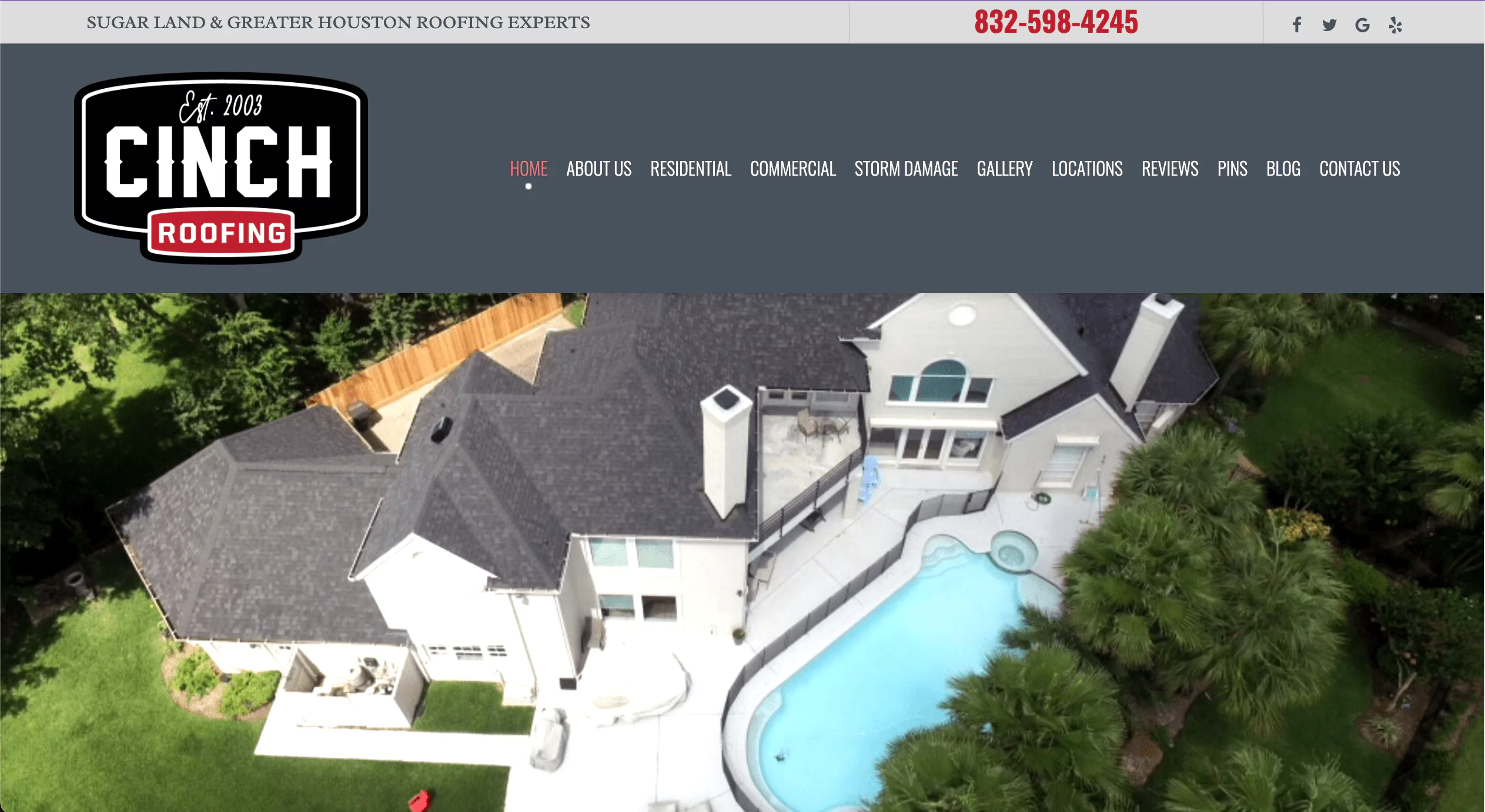
- Authentic, localized photography: Custom job-site photography outperforms stock images on trust and engagement metrics. Drone photography of local projects provides visual proof that no stock library can replicate.
- Clear service navigation architecture: Visually distinct pathways to individual services reduce decision fatigue. Single-trade contractors are the exception: they convert better with one dominant CTA.
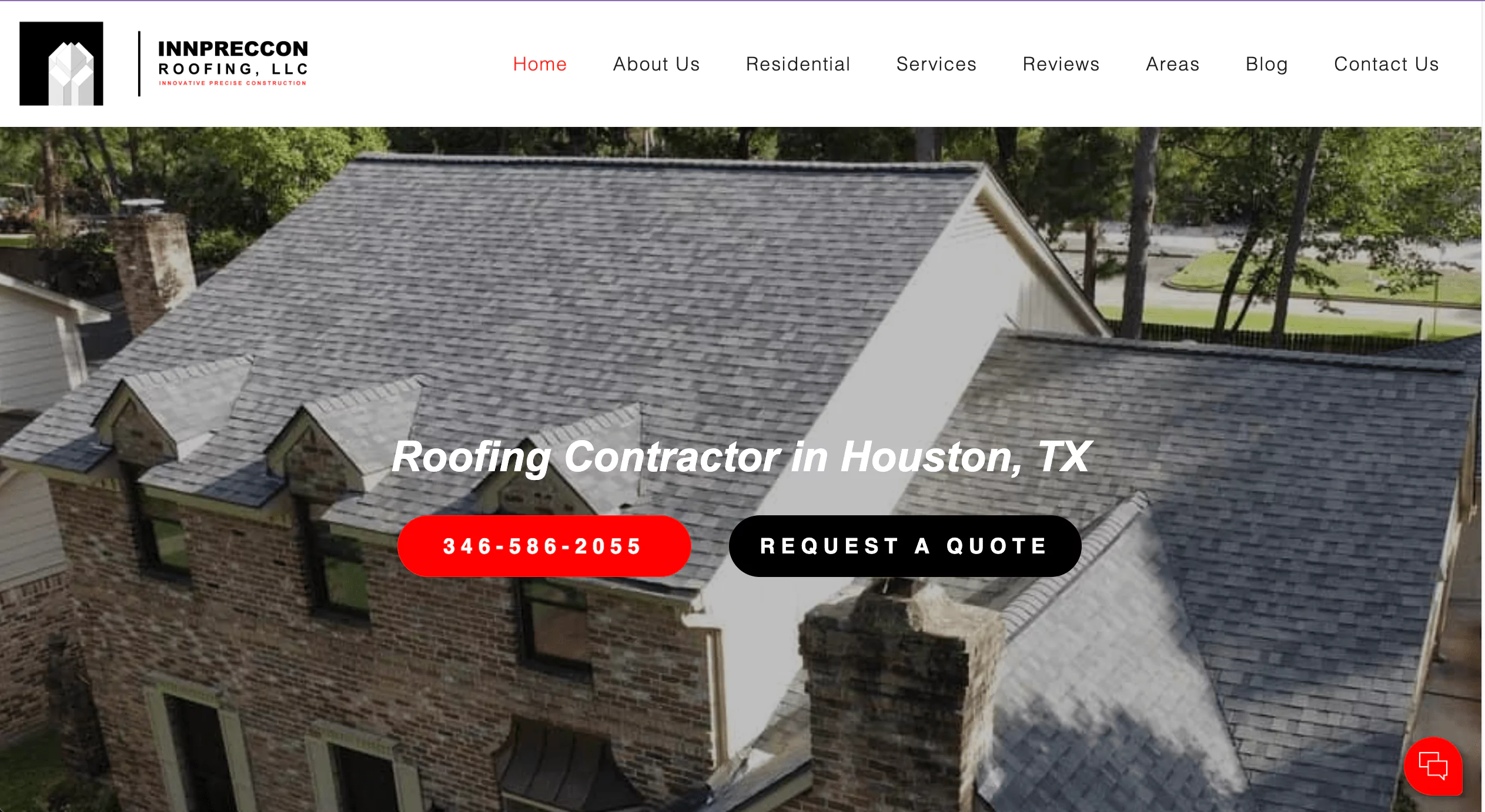
- Local identity signals in the hero section: Geographic markers in the first visible section (project photos, location copy, local awards) improve local search conversion. Multi-location contractors should move location signals to dedicated landing pages rather than the homepage.
- Frictionless contact architecture: Phone numbers, quote forms, or scheduling tools must be visible without scrolling. Instant quote tools are effective for residential contractors and counterproductive for commercial ones.
Four structural problems account for most roofing website lead failures: stock photography, no visible social proof above the fold, slow load time, and no mobile-first layout.
When a Roofing Website Fails to Convert
Most roofing websites that don’t generate leads fail for one of four reasons:
- Stock photos: Visitors pattern-match generic images to “template site” and discount credibility before reading a word.
- No visible social proof above the fold: Review counts, badges, and awards need to appear within the first scroll, not buried in a footer.
- Slow load time: Google’s Core Web Vitals criteria set 2.5 seconds as the maximum threshold for a “Good” Largest Contentful Paint (LCP) score, per Google Search Central documentation. The most common culprits on roofing sites are uncompressed hero images and unoptimized third-party review widgets.
- No mobile-first layout: Google has applied mobile-first indexing to all websites as of May 2023, meaning the mobile version of every site is the version Google evaluates for rankings, not the desktop version.
A Note on How This Guide Was Assembled
After overseeing the development of hundreds of contractor websites at Roofing Webmasters, one pattern is clear: sites that consistently produce qualified leads share specific, repeatable design and structural decisions, while sites that look good but underperform are missing one or more of the same elements.
This guide breaks down 14 real roofing websites, identifies which design decisions drive measurable outcomes, and explains when each approach applies and when it doesn’t.
5 Design Patterns That Separate Converting Roofing Websites
Five recurring patterns account for most of the measurable differences in conversion performance across contractor websites analyzed at Roofing Webmasters.
Pattern 1: Social Proof Positioned Before the Scroll
Roofing websites that display review counts, third-party review widgets, or award badges in the hero section before a visitor scrolls reduce the friction between browsing and calling.
Centennial Roofing (Nashville, TN) anchors its homepage hero with a badge displaying 600+ Google reviews alongside a local project photo that reflects the Nashville market. The design conveys trustworthiness at first glance, before a visitor reads a word of body copy.
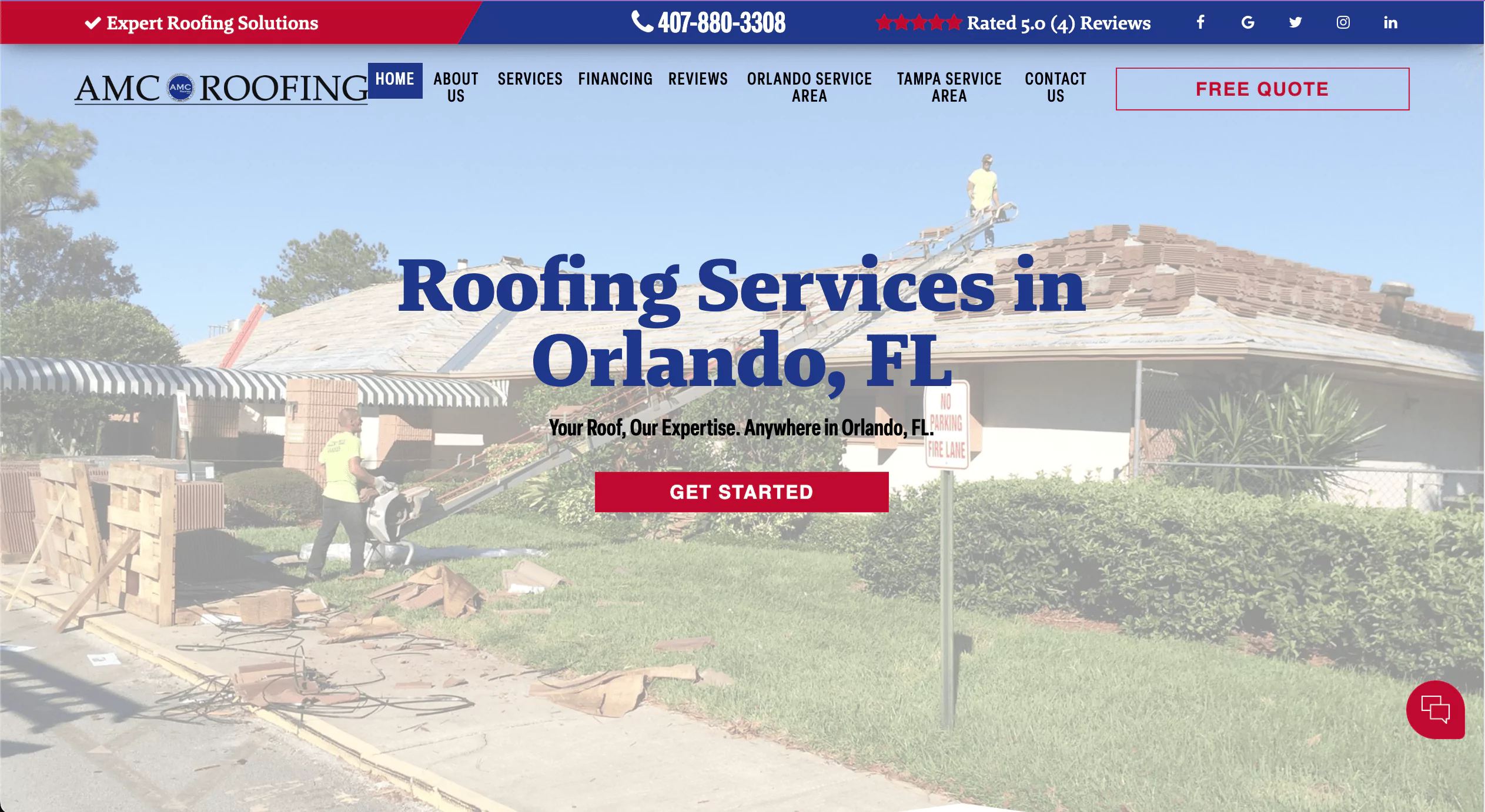
A Godsend Roofing (Lexington, KY) achieves the same result with a local-specific award badge positioned in the primary visual path, paired with CTAs that are visible without scrolling. The badge functions as a borrowed-authority signal that reduces the trust gap for first-time visitors.

When this doesn’t apply: New roofing companies with fewer than 20–30 reviews should not lead with review counts. A low count displayed prominently signals inexperience rather than credibility. For newer companies, manufacturer certifications (GAF Master Elite, CertainTeed SELECT ShingleMaster) or a years-in-business figures serve as credibility substitutes until the review base matures.
Pattern 2: Authentic, Localized Photography
Custom photography of actual roofing jobs in the local service area outperforms stock photos on trust signals and visitor engagement.
Website conversion research consistently shows that authentic imagery, real people, real jobsites, and real locations generate higher engagement than stock photography across service businesses, with studies in adjacent industries documenting conversion rate improvements of 30–35% when custom images replace generic ones.
No roofing-specific controlled study has been published, but the evidence points in a consistent direction: visitors identify stock photos quickly, and recognition of a stock image reduces credibility before any other content is evaluated.
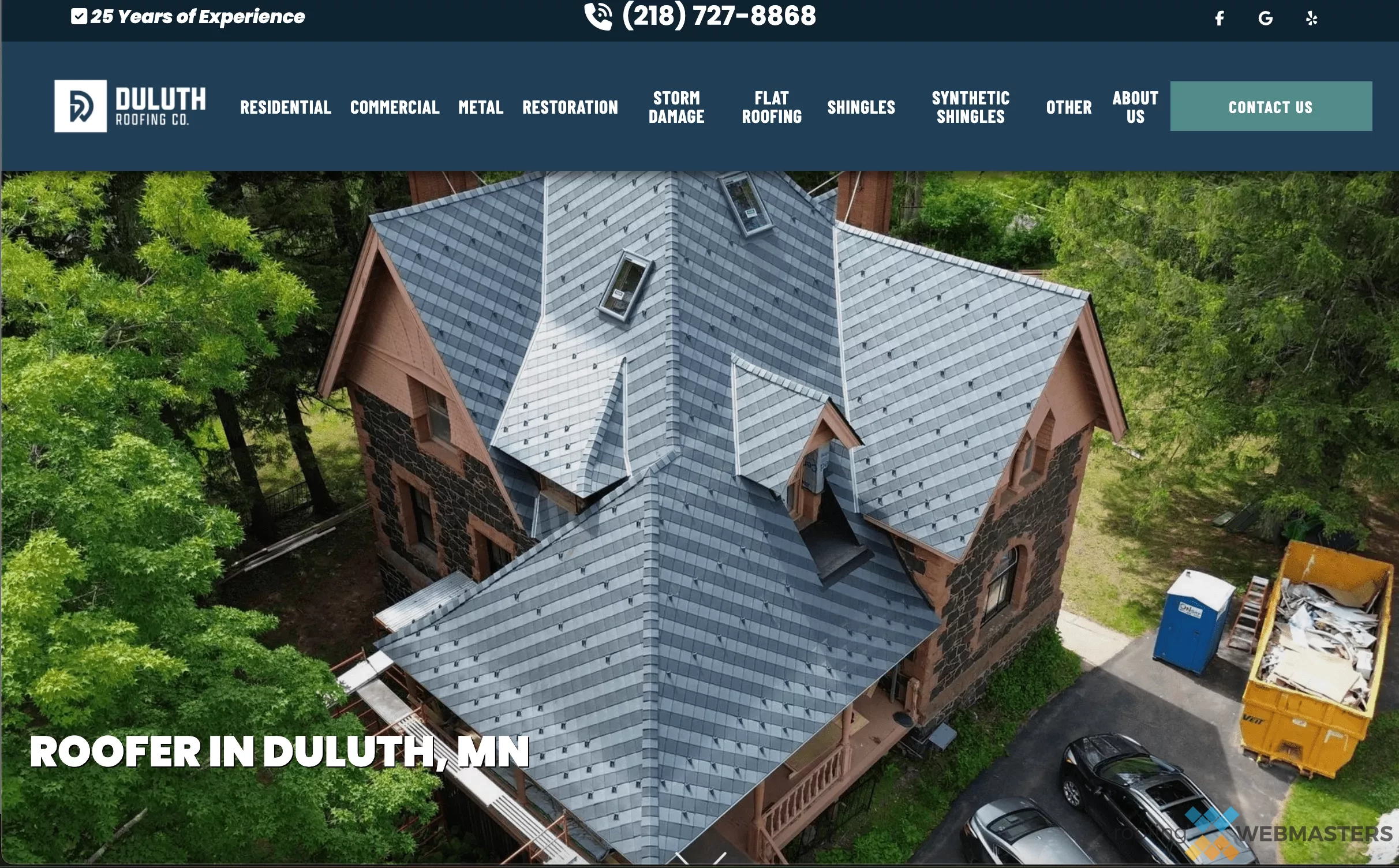
Duluth Roofing Company (Minnesota) uses 100% original, high-definition overhead drone shots of Minnesota-based projects. These images eliminate skepticism about stock photos and provide unique, localized visual content that no competitor using the same stock library can replicate.
Precision 1 Roofing (Central Ohio) leads with a project slideshow featuring recognizable Central Ohio neighborhoods, creating an immediate regional connection for visitors evaluating whether this contractor works in their area.
Express Roofing & Restoration (Indianapolis) uses an interactive crew video in the hero section, a format that signals operational transparency in a way static images cannot and provides original visual content unique to the company.
Original images of local job sites also provide unique visual content that search engines can index independently. Drone photography, in particular, provides overhead project documentation that no stock library can replicate for local credibility.
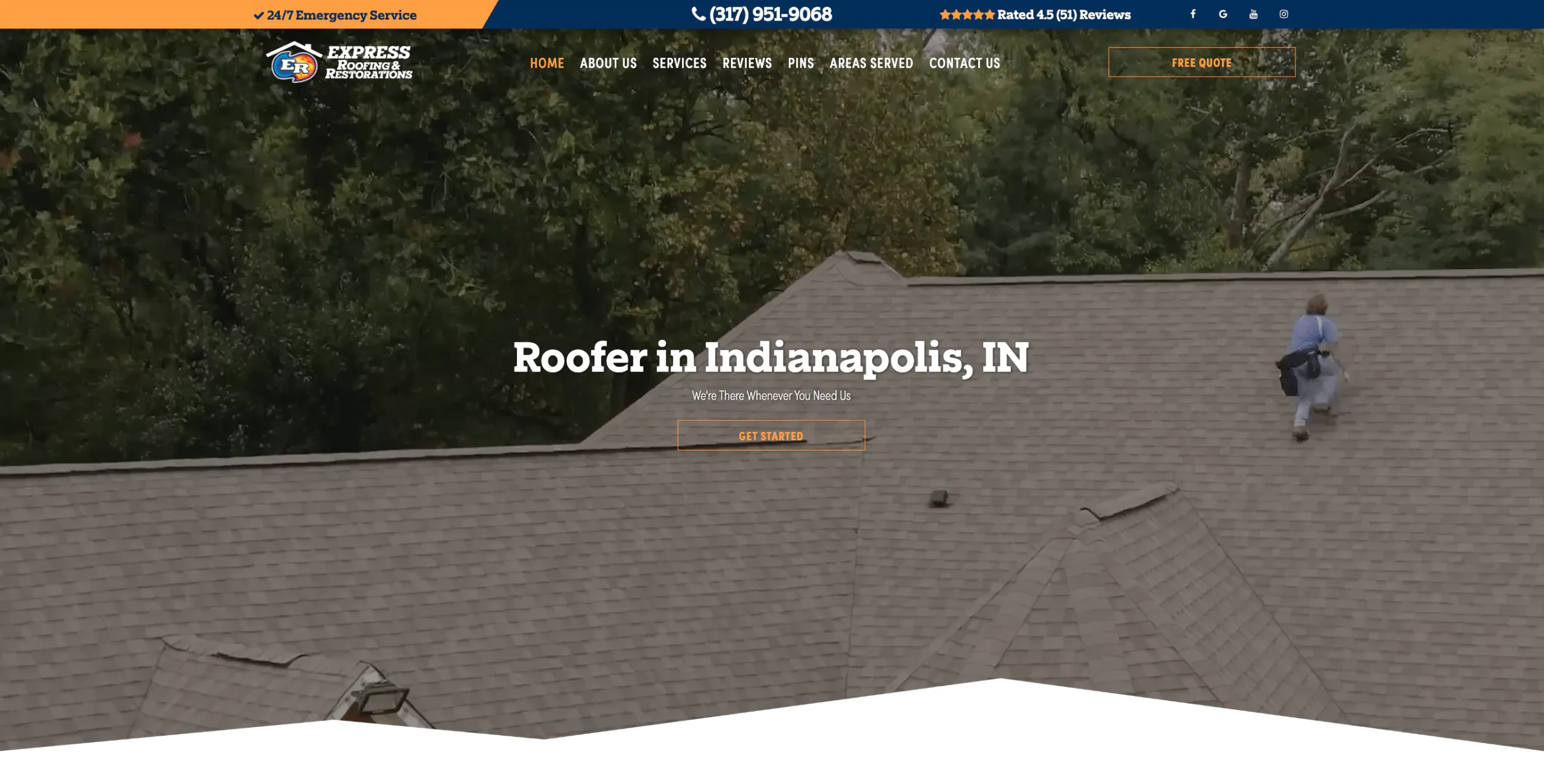
When this doesn’t apply: For roofing companies launching a new website before building a photo library, professionally styled brand photography, team photos, equipment photos, and branded truck photos outperform stock images, even without jobsite photos. The priority is authenticity over polish, not custom over any available image.
Pattern 3: Clear Service Navigation Architecture
Roofing websites that organize services into clearly labeled, visually distinct navigation pathways reduce decision fatigue and increase the likelihood that a visitor finds the specific service they need without leaving.
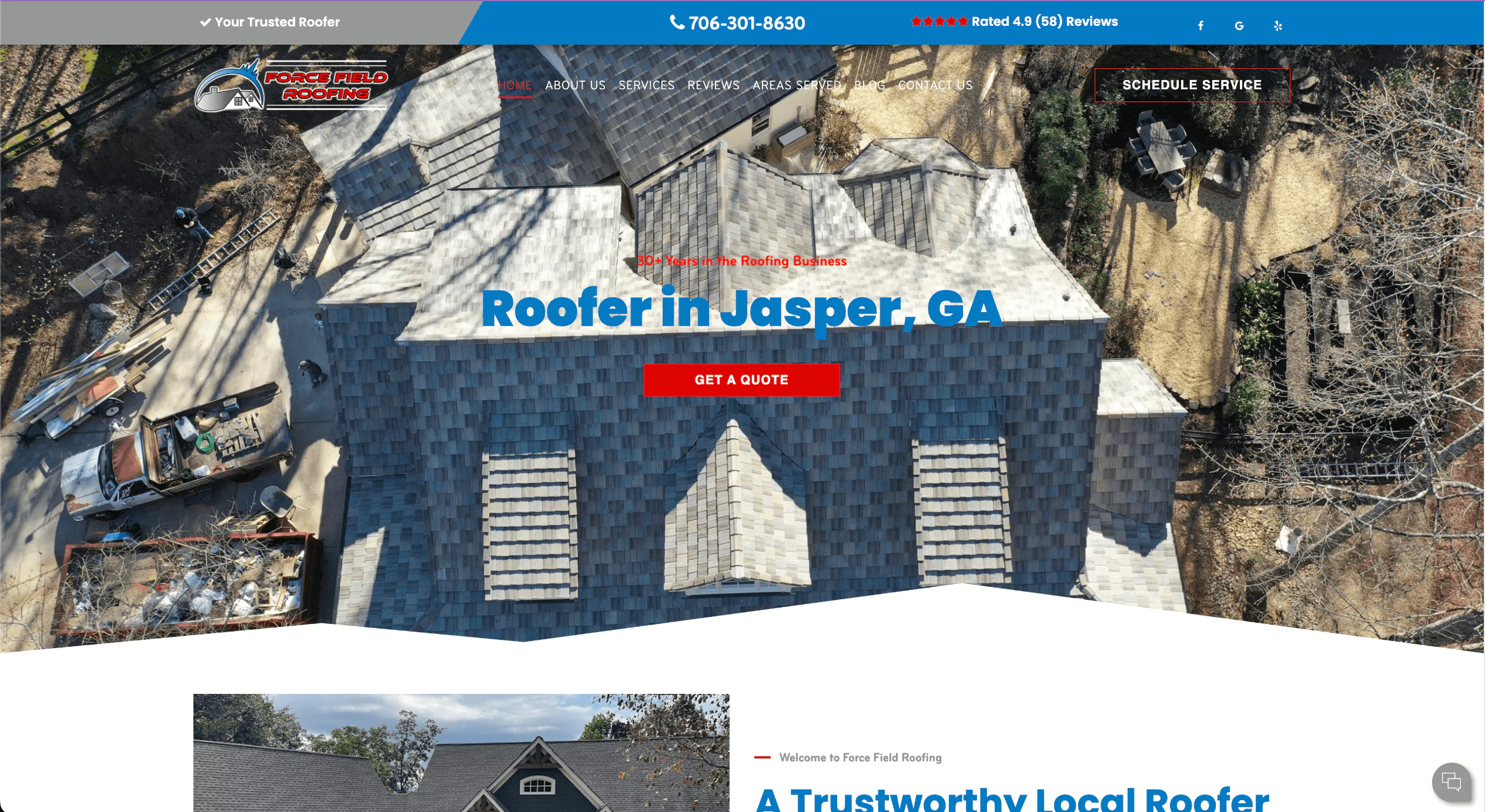
Force Field Roofing (Jasper, GA) uses custom geometric service buttons that provide immediate visual pathways to sub-services, reducing the mental load for visitors who arrive with a specific need: roof repair, full replacement, or gutters. Each pathway leads to a dedicated page rather than a general services page.
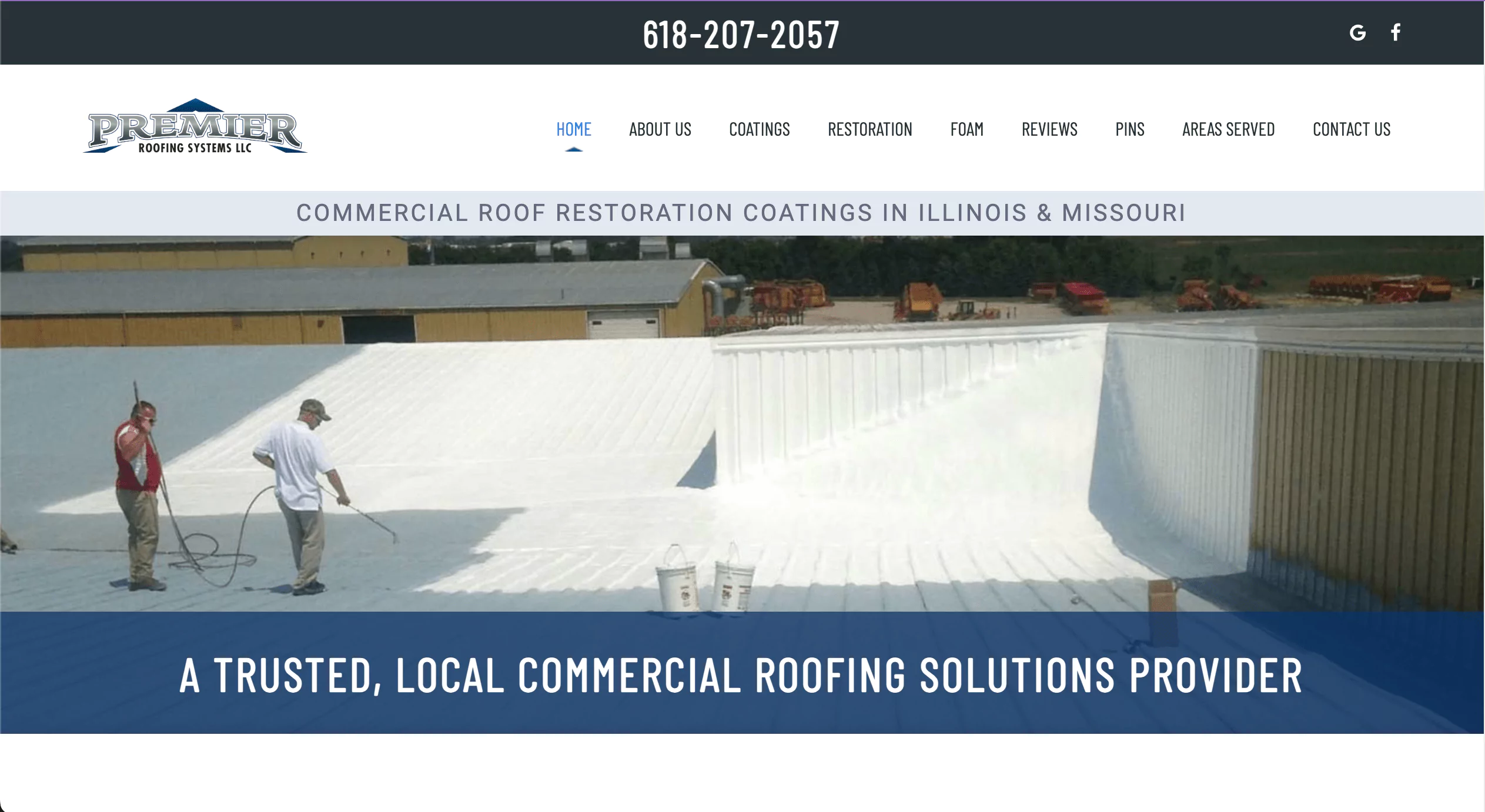
Premier Roofing Systems (a commercial roofing specialist) uses service-specific landing pages for acrylic, elastomeric, and silicone coatings rather than combining all coatings on a single page. This silo structure serves commercial buyers who arrive with precise product intent and who will leave if they cannot find their specific system on a dedicated page.
When this doesn’t apply: Single-trade roofing companies: replacement-only operations, for example, don’t benefit from complex service navigation. For them, a streamlined homepage with a single dominant CTA consistently outperforms a multi-pathway layout, which introduces unnecessary decision points for visitors who have only one service need.
Pattern 4: Local Identity Signals in the Hero Section
Roofing is an inherently local business. Websites that establish a geographic identity in the first visible section, through project photos, location-specific copy, local awards, or regional visual identity, outperform generic layouts for local search conversions, because they immediately confirm to the visitor that this contractor serves their area.
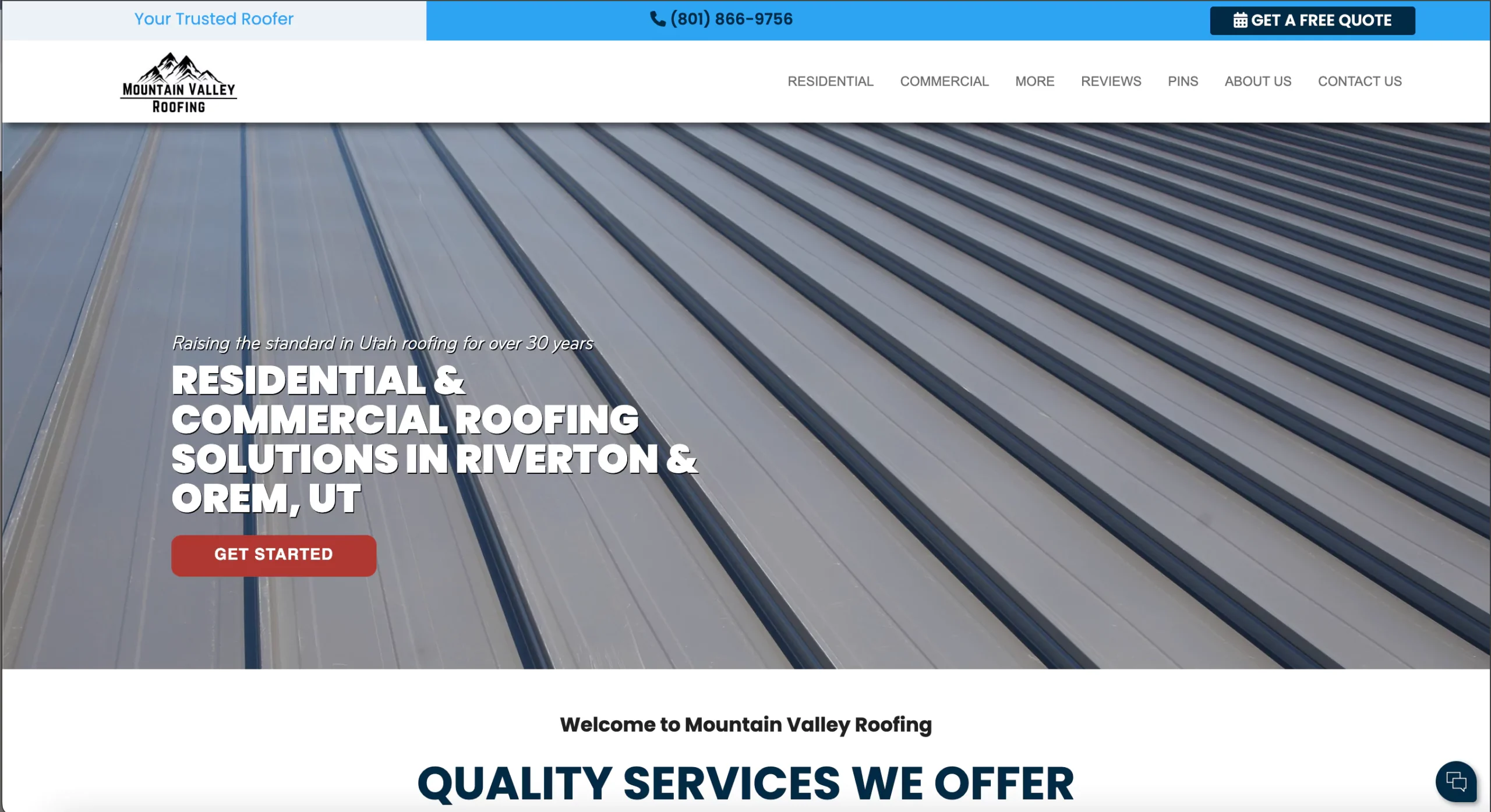
Mountain Valley Roofing (Utah) builds its entire visual identity around the regional landscape native to its Utah market. The result is a site that functions as a local institution rather than a franchise template; a meaningful distinction for homeowners evaluating multiple contractors.
Umbrella Roof (Philadelphia) tailors both copy and imagery specifically to the Philadelphia market, directly addressing local homeowners rather than presenting a generic contractor profile that could apply to any city.
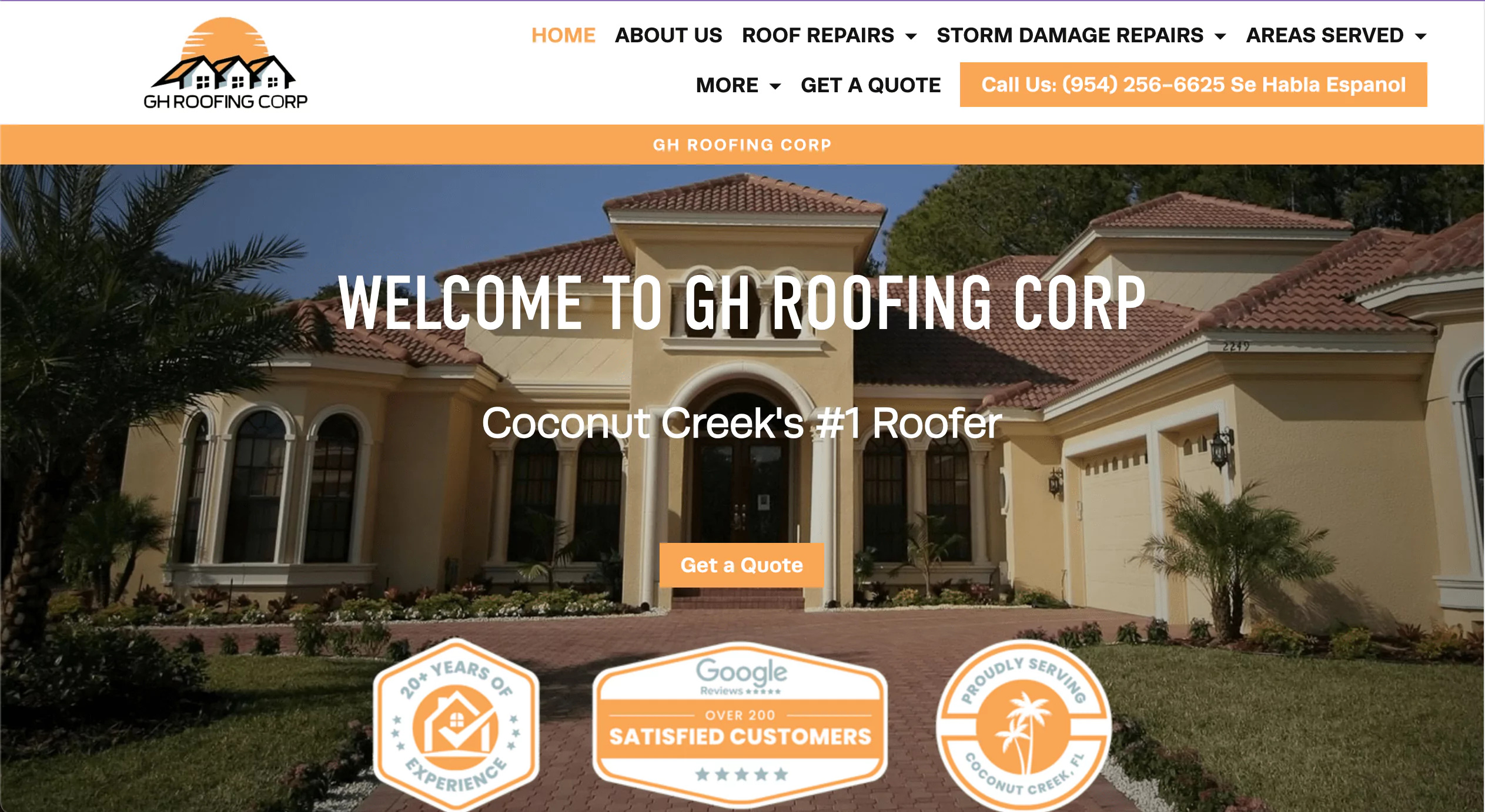
When this doesn’t apply: Roofing companies operating across multiple metro areas; regional contractors or franchise operations should not localize the homepage hero. For multi-location operators, geographic identity signals belong on individual location landing pages or location-specific subdomains, not on the regional or franchise homepage.
A homepage hero that references a single city creates a mismatch for visitors arriving from any other market within the service area.
Pattern 5: Frictionless Contact Architecture
Converting a roofing lead requires eliminating every unnecessary step between interest and contact. The highest-performing roofing websites make phone numbers, quote forms, or scheduling tools visible without requiring any scrolling or navigation.
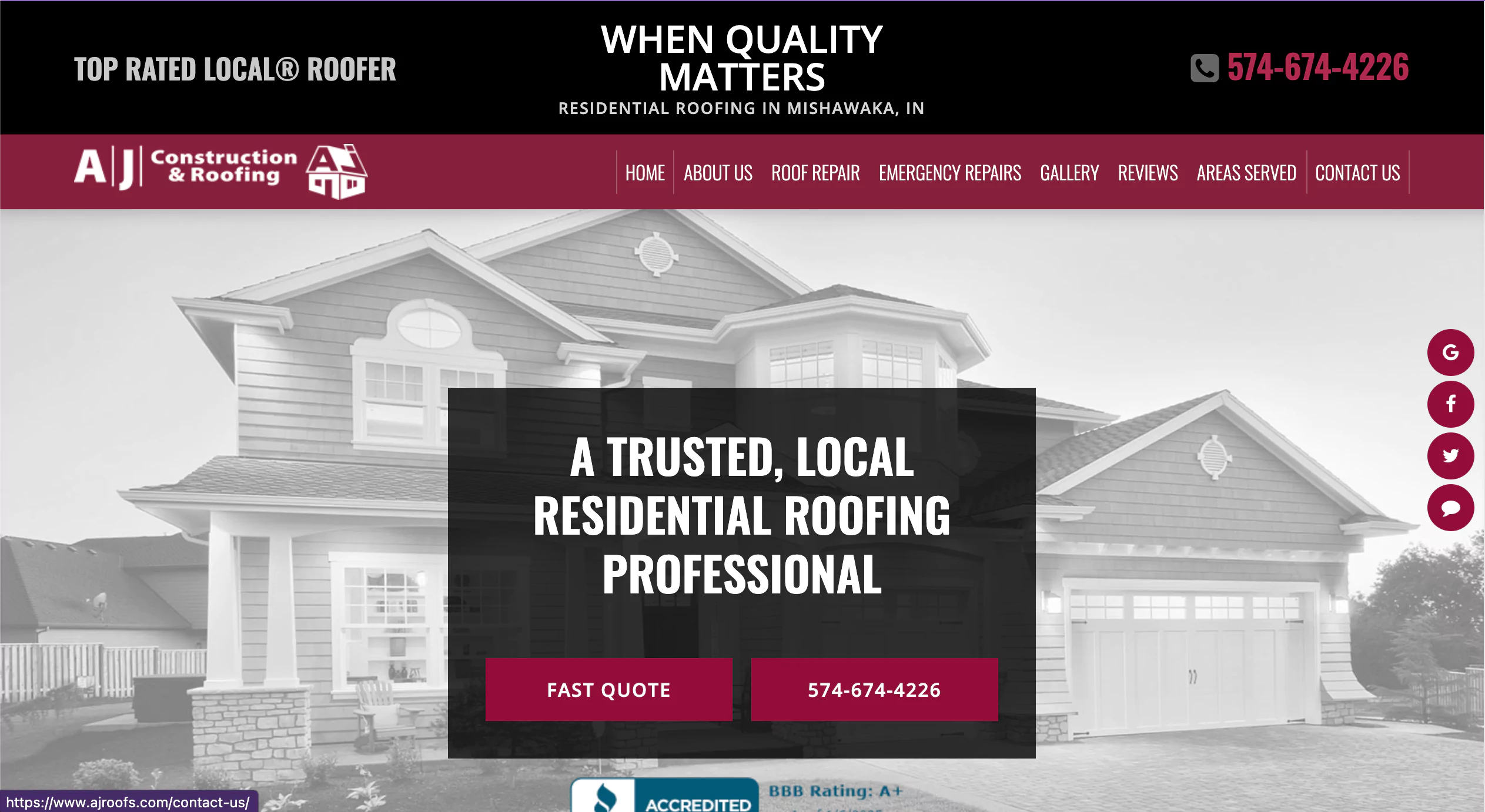
AJ Construction & Roofing (Mishawaka, IN) positions the phone number and “Fast Quote” button within the primary left-to-right visual path of the hero section, capturing high-intent visitors at peak interest, before any friction reduces the probability of contact.
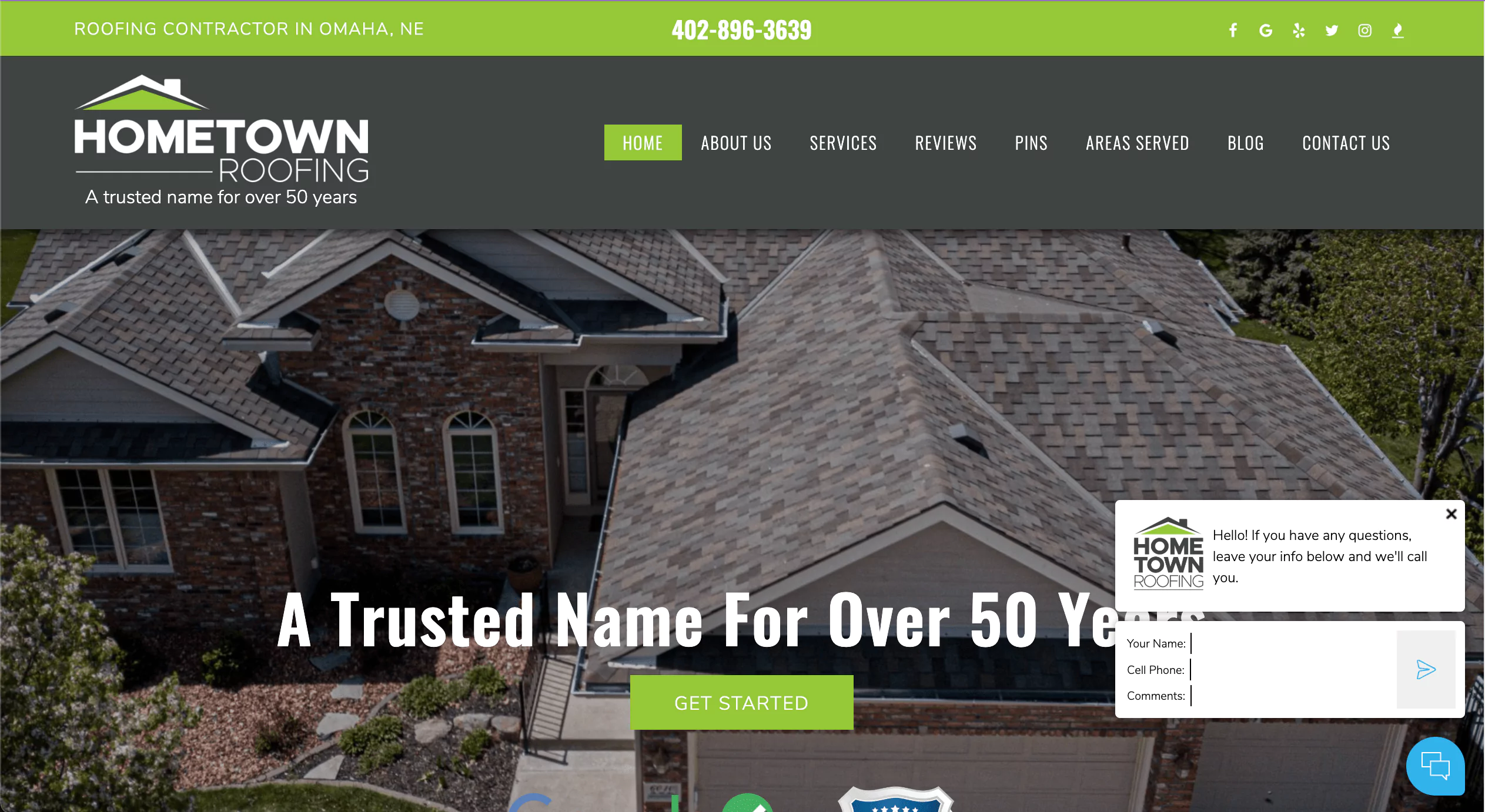
Hometown Roofing (Omaha, NE) distributes contact forms across multiple sections of the homepage rather than concentrating them at the top. This structure captures visitors who are ready to act at different stages of their scroll, not only those who engage immediately.
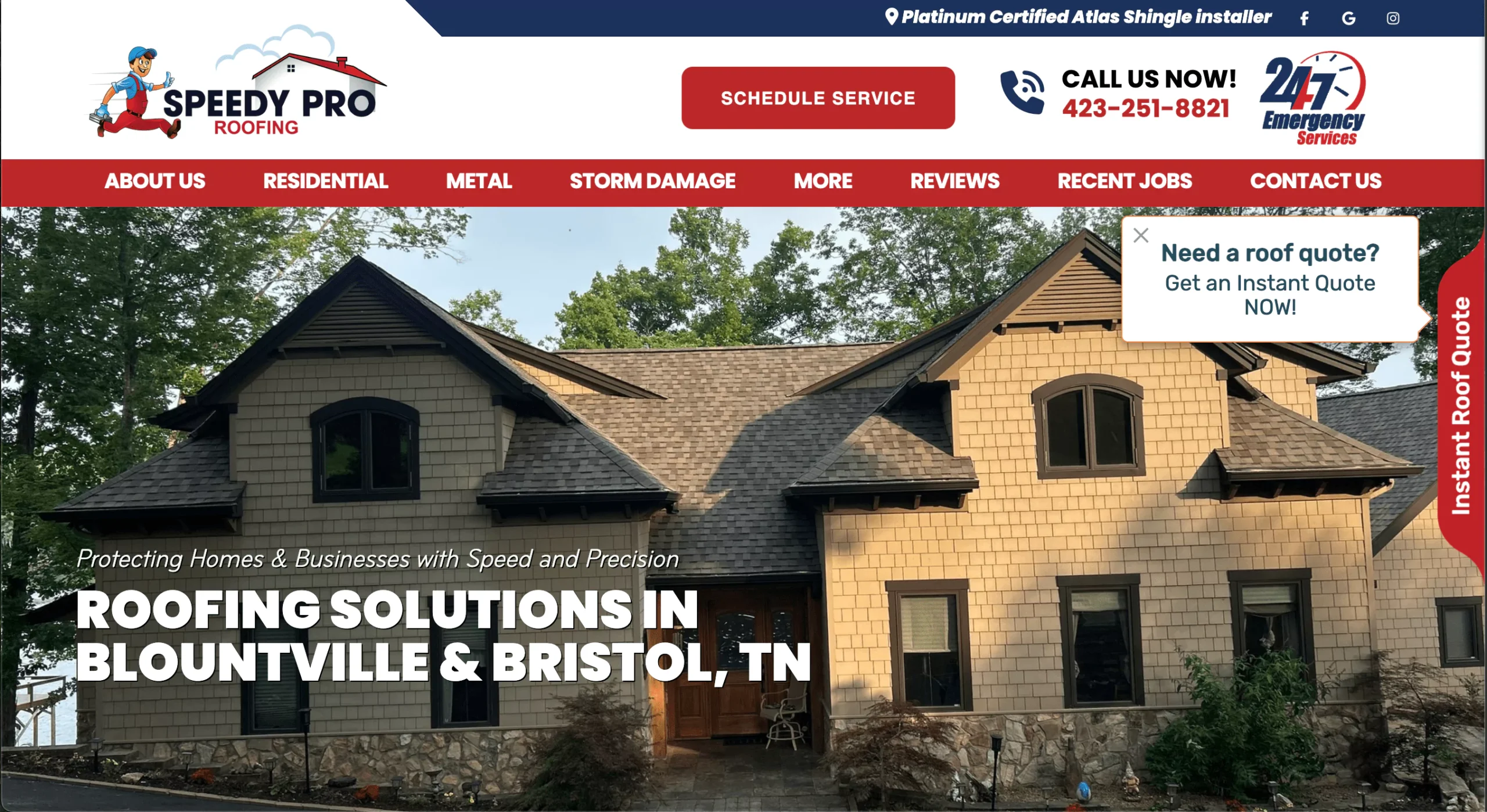
Speedy Pro Roofing (Tennessee) addresses the single largest friction point in the residential roofing sales cycle: wait time for a quote, by embedding an instant quote tool directly on the homepage, supported by 100+ visible Google reviews that establish confidence before a visitor submits. The combination of instant pricing and visible social proof removes two separate objections simultaneously.
Southern Guard Roofing (Pelham, AL) uses dual CTAs (“Schedule Online” and “Call Now”) to serve two distinct visitor preferences: those who prefer digital interaction and those who prefer immediate phone contact. Neither group is forced into the other’s preferred channel.
When this doesn’t apply: Instant quote tools are ineffective for commercial roofing websites. A commercial project’s scope requires a custom site assessment, and presenting an instant price tool to a commercial buyer signals that the contractor may not understand the complexity of commercial projects.
For commercial contractors, the conversion goal is an inspection appointment, not a price quote; and the CTA language and form structure should reflect that distinction.
Roofing Website Design Principles: What the Data Says
Mobile Experience
Google has applied mobile-first indexing to all websites, meaning the mobile version of a roofing website is the version Google evaluates for rankings, not the desktop version. Google completed the full rollout of mobile-first indexing to all remaining sites by May 2023, per Google Search Central documentation.
As of Q1 2026, mobile devices (excluding tablets) account for 52.27% of global website traffic, according to StatCounter data published by Statista. This figure fluctuates by quarter; the global share peaked at approximately 61% in 2024 before moderating, but mobile consistently represents the majority of web traffic globally.
In North America specifically, mobile accounts for a lower share (approximately 45–56% depending on the source and period) because desktop usage remains higher in markets with established broadband infrastructure.
A roofing website that is not optimized for mobile navigation, tap-friendly CTAs, and fast mobile load times is structurally disadvantaged in both search rankings and conversion rates.
Site Speed
According to Google’s “Need for Mobile Speed” research, 53% of mobile website visitors will leave if a page takes longer than three seconds to load.
This figure comes from Google’s mobile benchmarking research and has been the primary cited standard for load time expectations since its publication.
Roofing websites can measure load performance using Google PageSpeed Insights (pagespeed.web.dev). The most common speed problems on roofing sites are uncompressed hero images and unoptimized third-party review widgets, both of which can be addressed without a full site rebuild.
Custom Photography vs. Stock Photos
Custom photography of actual roofing jobs provides two distinct advantages over stock images: trust differentiation and unique visual content.
On trust: visitors quickly identify stock photos. Usability research by Jakob Nielsen, cited by conversion research firm CXL, shows that people pay significantly less visual attention to stock photo subjects than to real people in authentic contexts.
For service businesses where the contractor’s identity and work quality are central to the purchase decision, stock photos reduce the credibility signal before a visitor reads a word.
On search: original images of local job sites provide unique visual content that can be indexed independently in image search. Stock images, by contrast, may appear across hundreds of other websites, reducing their indexing value for local search visibility.
The case for custom photography is strongest for established roofing companies with a portfolio of completed local jobs. For companies without a photo library, brand photography, real team members, real equipment, and real trucks is the achievable first step.
Social Proof Integration
Third-party review widgets, which embed live Google review feeds rather than manually copied reviews, provide real-time verification that a roofing company’s reputation is up to date and unedited. Static, copied reviews do not carry the same credibility signal because visitors cannot independently verify them.
Platforms such as GatherUp and EmbedReviews display review counts and scores that update automatically as new reviews arrive. The live feed format matters because it signals to visitors that the review record is complete and ongoing, not curated.
Manufacturer Certifications and Industry Badges
GAF Master Elite certification, CertainTeed SELECT ShingleMaster status, and BBB accreditation badges function as borrowed-authority signals on roofing websites; they provide third-party validation of contractor quality that the contractor cannot self-assert.
GAF Master Elite certification is held by approximately 2% of roofing contractors in the United States, per GAF’s contractor network. The scarcity of the credential is part of its credibility: displaying the badge signals that the company met a standard most competitors have not met.
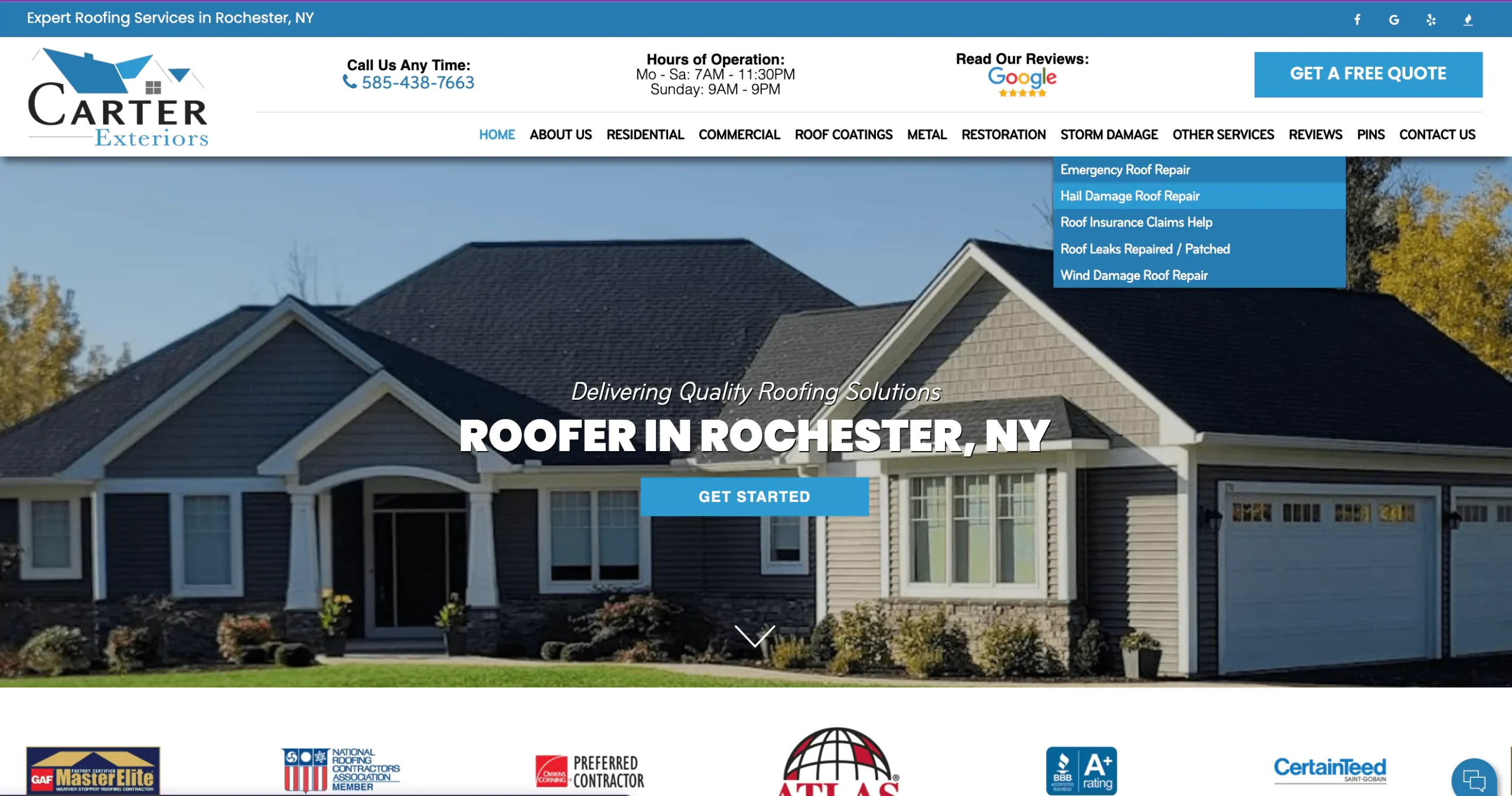
Carter Roofing and Exteriors (Rochester, NY) leads its homepage with a badge slider featuring GAF and CertainTeed credentials, establishing manufacturer-level credibility before a visitor evaluates any other content on the page.
Commercial vs. Residential Roofing Website Design
Commercial and residential roofing websites serve different buyer psychologies and require structurally different design approaches.
Using a residential design template for a commercial roofing company, or vice versa, signals a mismatch to buyers and reduces conversion rates.
| Design Element | Residential Roofing Website | Commercial Roofing Website |
|---|---|---|
| Primary buyer | Homeowner, single decision-maker | Facility manager, property owner, or multi-stakeholder committee |
| Trust signals | Repair, replacement, gutters, storm damage; organized by job type | Project scale documentation, system-specific case studies, equipment photos, industry certifications |
| Hero CTA | “Get a Free Estimate,” “Call Now,” instant quote tool | “Schedule an Inspection,” “Request a Consultation” |
| Service pages | Repair, replacement, gutters, storm damage; organized by job type | TPO, EPDM, acrylic coatings, silicone coatings, metal; organized by system type |
| Photography | Local homes, recognizable neighborhoods, crew on residential jobs | Flat roofs, large-scale commercial projects, equipment, aerial documentation |
| Social proof format | Star ratings, review counts, homeowner testimonials | Project case studies, named client references, square footage completed |
| Navigation depth | Shallow; most visitors need one service; reduce decision points | Deep; buyers arrive with specific system intent; dedicated landing pages per system |
| Instant quote tool | Effective; reduces friction for residential buyers | Counterproductive; signals misunderstanding of commercial project scope |
| Content depth | Shorter pages; homeowners decide quickly | Longer pages; multi-stakeholder decisions require more supporting information |
A commercial roofing company using family home imagery and “call for a free estimate” CTAs will signal a mismatch to commercial prospects before a single line of copy is read.
Guidance by Roofing Contractor Type
New or Startup Roofing Companies (Fewer Than 20–30 Google Reviews)
New roofing companies face a specific credibility gap: the social proof patterns that drive conversions for established contractors are unavailable or counterproductive at low review volumes.
The most effective substitutes in the early stage:
- Manufacturer certifications; GAF Master Elite, CertainTeed SELECT ShingleMaster, and similar credentials are achievable without a review base and carry third-party authority that new companies cannot self-assert.
- Years in business or leadership experience: If the principal has 15 years of roofing experience before launching the company, that figure belongs in the hero section, not the About page.
- Project documentation from day one; Every completed job should be photographed. Even a small portfolio of five to ten real local projects outperforms any stock image library for trust signaling.
- Individual founder or team photography: Real faces with real names reduce the anonymity that makes new contractor sites feel like temporary operations.
The conversion architecture for new companies should emphasize certifications, experience, and process transparency rather than review volume. Once the review base reaches 20–30 verified Google reviews, the standard social proof patterns apply.
Multi-Location and Franchise Roofing Contractors
Multi-location roofing contractors face a structural tension: a homepage localized for one market creates a mismatch for visitors from other markets in the service area.
The solution is architectural, not cosmetic:
- Homepage: Uses regional identity signals (service area name, regional imagery) without referencing a single city or neighborhood. CTAs direct visitors to find their local branch or enter their zip code.
- Location landing pages: Each market gets a dedicated page with local project photography, local review data, local certifications, and location-specific contact information. These pages, not the homepage, carry the local identity signals described in Pattern 4.
- Subdomain vs. subfolder; Both structures can work. The operational consideration is whether each location’s review data and content will be managed independently (favors subdomains) or centrally (favors subfolders).
Multi-location contractors who apply residential homepage localization patterns to their regional domain create a navigation problem for out-of-area visitors and a signal mismatch for search engines indexing multiple service areas.
Roofing Website Audit: What to Address First
If your site has one or more of the following gaps, address them in this order, from the highest-impact to those that require more lead time.
- Run Google PageSpeed Insights before anything else. Speed problems built into a site’s foundation will undermine every other improvement. Identify whether a slow LCP is caused by the hero image, a review widget, or a third-party script before making design changes. Tool: pagespeed.web.dev.
- Add a live review widget above the fold if you have 30+ Google reviews and no visible review count in the hero section. This is typically a same-day change and immediately reduces trust friction for new visitors.
- Replace stock photos with real job-site photography if your site currently uses stock images in the hero section or service pages. For contractors without an existing photo library, start with the hero section. Even a single high-quality photo of a local project outperforms any stock image for trust and local relevance.
- Verify your mobile site matches your desktop site in content, contact forms, and load time. Use Google’s PageSpeed Insights mobile scores. Content or CTAs that are missing or broken on mobile are being indexed in their broken state.
- Split combined service pages into individual service pages if your residential and commercial services, or your repair and replacement services, currently share a single page. Individual service pages with dedicated content are more likely to rank for specific service queries.
- Add manufacturer certification badges to your hero section or primary visual path if you hold GAF Master Elite, CertainTeed SELECT ShingleMaster, or equivalent credentials. These belong above the fold, not in the footer.
- Review your commercial vs. residential design alignment using the comparison table above. If your company is primarily commercial but your site uses residential design patterns, homeowner imagery, instant quote tools, and neighborhood photography, the mismatch is reducing conversion rates with commercial prospects before they read a line of copy.
About This Roofing Website Guide
The 14 examples in this guide were analyzed based on specific, repeatable design decisions that roofing companies can implement regardless of market size or budget tier.
The patterns above apply most directly to residential roofing contractors operating in a single market with an established review base. Commercial contractors, new companies, and multi-location operators will find the relevant segment guidance in the sections above.
Roofing Webmasters has built and optimized hundreds of contractor websites. For a direct assessment of how your current site compares to these benchmarks, contact us here or call (800) 353-5758.

Author: Nolen Walker
Nolen Walker is the founder of Roofing Webmasters, assisting roofers with website design for 16+ years. Nolen is also the creator of DataPins™ and author of A Complete SEO Guide for the Roofing Small Business Owner. In addition, Nolen hosts The Roofing SEO Podcast on Spotify.